The Independent National Electoral Commission has filed appeals against two recent Federal High Court rulings that questioned key components of its timetable for the 2027 general elections.
The commission also warned that any attempt to dismantle parts of the schedule could disrupt the entire electoral process.
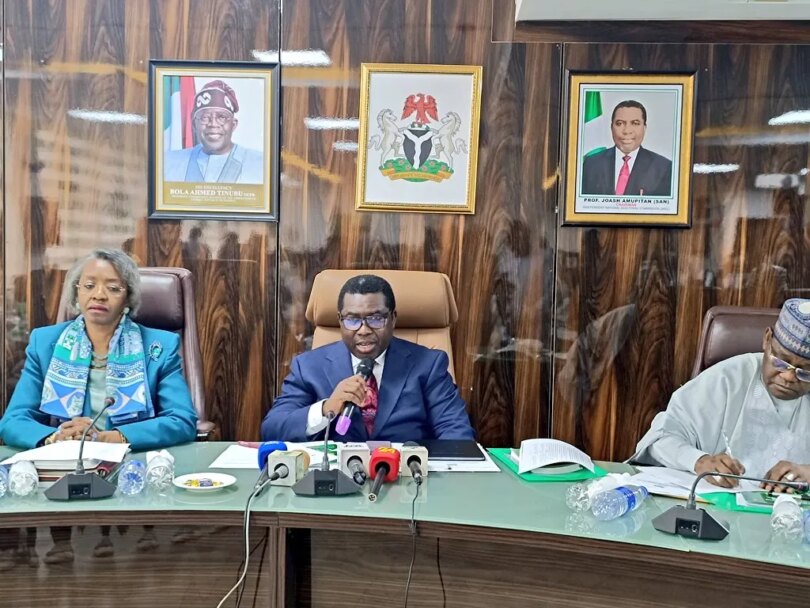
INEC Chairman, Prof Joash Amupitan (SAN), stated this on Tuesday during its Second Quarterly Consultative Meeting with leaders of registered political parties.
Amupitan said the commission had reviewed the two judgments and decided to approach appellate courts for clearer interpretations of its legal and constitutional mandate in organising election activities.
The first ruling, delivered on May 20, 2026, in a case filed by the Youth Party against the electoral body, challenged certain timelines set out in INEC’s election schedule.
The second judgment, issued on May 26, 2026, in a suit instituted by the Social Democratic Party, affirmed the commission’s authority to issue an electoral timetable but struck out some timelines relating to candidate nomination and substitution procedures.
In its reaction, INEC maintained that the disputed timetable is built on interconnected processes that cannot be separated without affecting the integrity of the entire election planning structure.
Citing portions of the court’s own observation in the SDP ruling, Amupitan noted that “an election timetable, without a date for submission of parties’ membership register, timeframe for primaries, etc., is inchoate. Without this timetable, there would be chaos in our electoral system.”
He added that while the commission respects the judiciary and will continue to comply with lawful decisions, the cases raise fundamental questions about the scope of its powers in regulating elections.
“While the commission remains fully respectful of the decisions of the courts and of the judicial process generally, these judgments raise important legal questions concerning the extent of the commission’s constitutional and statutory powers in coordinating and regulating electoral activities,” the INEC chairman said.
According to him, the electoral timetable is not merely a list of dates but a coordinated framework that guides multiple administrative and logistical processes required for credible elections.
He stressed that although the Electoral Act provides timelines for certain activities, several critical steps in election preparation are not expressly covered by statute but must still be accommodated within the overall schedule.
Among the activities he listed were the submission and verification of political parties’ membership registers, monitoring of party primaries nationwide, pre-upload of primary results on INEC’s designated portal, nomination processes, printing of ballot papers and result sheets, quality assurance procedures, deployment of election materials, training of personnel, voter education, procurement of sensitive materials, configuration of the Bimodal Voter Accreditation System, and compliance with legal requirements such as allowing parties to inspect samples of electoral materials under Section 42 of the Electoral Act, 2026.
Amupitan argued that these processes are interdependent and must be harmonised to ensure efficiency, transparency and fairness in the conduct of elections. He warned that isolating parts of the timetable could undermine administrative order and create uncertainty among political actors.
“The commission therefore considers it imperative that all electoral activities be harmonised within a coherent and workable framework that promotes certainty, transparency, administrative efficiency and equal treatment of all political parties,” he said.
He assured political parties and Nigerians that the legal challenge would not distract the commission from its preparations for the 2027 polls.
According to him, INEC remains committed to conducting credible elections in line with the Constitution, the Electoral Act, and binding judicial pronouncements.
Olamilekan Adigun is a graduate of Mass Communication with years of experience in journalism embedded in uncovering human interest stories. He also prioritises accuracy and factual reportage of issues.
What do you think about this?
Drop your opinion in the comment section.
FOLLOW US & Share this with someone who needs to see this.