The Chairman of the Independent National Electoral Commission (INEC), Prof. Joash Amupitan, has said adequate funding is critical to providing the security and logistics required for the successful conduct of the 2027 general elections….
The Chairman of the Independent National Electoral Commission (INEC), Prof. Joash Amupitan, has said adequate funding is critical to providing the security and logistics required for the successful conduct of the 2027 general elections.
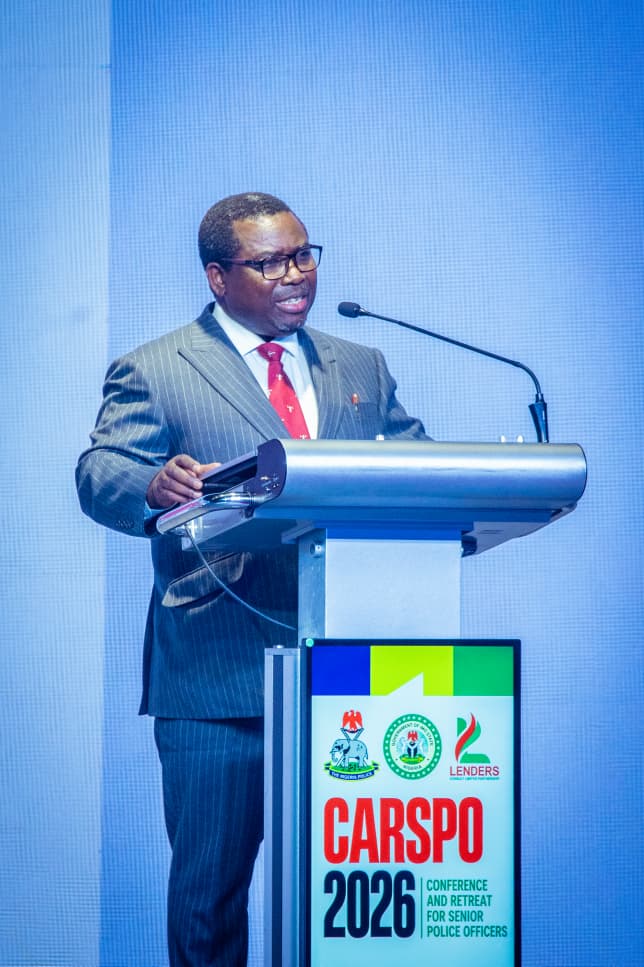
Amupitan spoke on Wednesday in Owerri, Imo State, while delivering a goodwill message at the sixth Conference and Retreat for Senior Police Officers, themed: “Developing a Nigeria Police Roadmap for Effective Management of Security During Elections.”
The INEC chairman said although the Commission’s funding is constitutionally provided as a first-line charge on the Consolidated Revenue Fund, the scale of its responsibilities requires sustained financial support.
He said INEC is responsible for presidential, National Assembly, governorship and state House of Assembly elections, as well as voter registration and the registration of political parties.
Amupitan added that the Commission also has statutory powers to request the deployment of security agencies during elections and voter registration, making security an integral part of the electoral process.
“Sometimes, it is not what you would like to do that you are able to do because of financial constraints,” he said.
“The system does make allocations of what is available and what is affordable at a particular time for the expenses and appropriation of the agencies, including the police and also including INEC.”
The INEC chairman said funding was particularly important for deploying personnel and electoral materials to local government areas, wards, registration areas and polling units.
He warned that even where security agencies successfully maintain peace, inadequate logistics could still undermine the conduct of elections.
Amupitan also identified voter registration as the foundation of credible elections, saying an inaccurate or outdated voters’ register could weaken the inclusiveness of the electoral process.
He argued that because INEC conducts elections across the three tiers of government, expenditure on elections, including security-related costs, should be treated as a collective national responsibility.
The chairman said INEC had made security and logistics priorities under his leadership and was working with government and security agencies to address operational challenges ahead of the 2027 polls.
He also highlighted the role of the Inter-Agency Consultative Committee on Election Security (ICCES) in coordinating INEC, security and other relevant government agencies.
According to Amupitan, ICCES has evolved from a post-2011 election coordination arrangement into a structured mechanism operating at federal, state and local government levels.
He said the Inspector-General of Police participates at the national level, commissioners of police at the state level, while divisional police leadership is represented at the local level.
The INEC chairman said stronger inter-agency coordination would be required ahead of the 2027 elections, stressing that the Nigeria Police Force remains the lead agency for election security.
He urged senior police officers to maintain professional neutrality, strengthen intelligence gathering and ensure seamless coordination with other agencies to protect the integrity of the electoral process.
Amupitan said lessons from recent off-cycle elections should be applied to preparations for the 2027 general elections, particularly in intelligence gathering, logistics and inter-agency coordination.


“In Nigeria, we want the best. We want our electoral system to be 100 per cent. But sometimes we don’t ask ourselves the question: if we want the nation to be perfect, there must be a cost for it,” he said.
He urged relevant authorities to provide INEC and security agencies with the resources required to carry out their responsibilities effectively.
The INEC chairman also expressed optimism that the Owerri retreat would produce an actionable roadmap for election security ahead of the 2027 general elections.
The Commission’s official timetable currently schedules the presidential and National Assembly elections for January 16, 2027, while the governorship and state House of Assembly elections are scheduled for February 6, 2027.
The President of the Nigerian Bar Association, Oyinkansola Badejo-Okusanya, also urged the leadership and operational personnel of the Nigeria Police Force to support and work closely with the INEC chairman.
She said effective policing support was necessary to safeguard the electoral process and facilitate free, fair, credible and transparent elections.