Advertisement
Advertisement
A coalition of opposition political parties in Nigeria has begun moves towards greater cooperation ahead of the 2027 general elections, with the G100 announcing plans for a summit aimed at opening discussions on a possible framework for opposition unity.
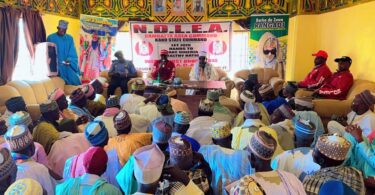
The G100 said representatives had, over the past week, held consultations with the leadership of six opposition parties — African Democratic Congress (ADC), Allied Peoples Movement (APM), National Democratic Congress (NDC), Peoples Democratic Party (PDP), People’s Redemption Party (PRP) and Social Democratic Party (SDP).
According to the group, the consultations involved national chairmen, presidential candidates and running mates of the parties and were held as part of efforts to advance what it described as the “Doctrine of Necessary Democratic Opposition”.
The development was contained in a statement signed by Salihu Moh. Lukman on behalf of the G100 and dated August 10, 2026.
The group said the consultations followed the release of its open letter on August 2 to opposition leaders, leaders of thought, civil society organisations and Nigerians of good conscience, in which it articulated its doctrine for building a credible opposition ahead of the 2027 elections.
The G100 said the discussions with the opposition parties had been “frank, constructive and encouraging”, with participants recognising the need for opposition parties to work more closely together.
It said the meetings were deliberately kept away from the media to allow the parties and their leaders to discuss sensitive issues without the pressure of premature public commentary.
“We believe that, at this stage, protecting the integrity of the process is more important than publicising every meeting,” the group said.
Opposition unity
According to the G100, there was a “clear recognition” across the consultations that Nigeria’s opposition parties needed to work more closely together ahead of the 2027 elections.
It said the leaders consulted also acknowledged that the emergence of a credible and effective opposition would require sacrifice, compromise and a willingness by political actors to place the broader interests of the country above narrow partisan and individual considerations.
The group said it was encouraged by what it described as the convergence of views among the opposition parties but warned that goodwill must now be translated into a practical framework for cooperation.
It said this was particularly important in implementing the principles of the Ibadan Declaration, especially its proposition that Nigeria’s opposition parties should find a credible pathway towards presenting a united and competitive alternative to voters in 2027.
Unity summit
As part of the next phase of the process, the G100 said preparations were underway for a Summit of Opposition Parties scheduled for Tuesday, August 18, 2026, in Abuja.
The summit, according to the group, would provide a structured platform for the participating parties to commence discussions on the modalities for achieving greater opposition unity.
The G100, however, stressed that it did not intend to dictate the outcome of the discussions.
Rather, it said its role was to facilitate dialogue, build confidence and create an environment in which the participating political parties could openly consider difficult questions surrounding cooperation, sacrifice, accommodation and collective action.
“Any framework that emerges must recognise the legitimate interests and concerns of all participating parties while ensuring that the overriding consideration remains the interests of the Nigerian people,” it said.
The group said it was working with representatives of the parties to finalise the modalities and arrangements for the summit.
It said the process would be deliberate and inclusive and anchored on mutual respect, arguing that sustainable political cooperation could not be imposed but must be patiently negotiated and collectively owned.
‘Fragmentation serves neither opposition nor Nigerians’
The G100 said the central argument of its Doctrine of Necessary Democratic Opposition remained that Nigeria’s democracy would be strengthened when citizens were presented with a credible alternative capable of effectively competing for their mandate.
It argued that fragmentation among opposition parties seeking to provide such an alternative would serve neither the opposition nor the Nigerian people.
“The central argument of the Doctrine of Necessary Democratic Opposition remains unchanged: Nigeria’s democracy is strengthened when citizens are presented with a credible alternative capable of competing effectively for their mandate,” the group said.
“At this critical moment in our national journey, fragmentation among those seeking to provide that alternative serves neither the opposition nor the Nigerian people.”
The group said the consultations held so far represented only the beginning of what could become a wider process of political cooperation among opposition parties and leaders.
It acknowledged that achieving unity would require patience, courage and sacrifice from the various political actors.
The G100 pledged to continue facilitating the process in good faith and in what it described as the overriding interest of Nigeria and its democracy.
“The task ahead will require patience, courage and, above all, sacrifice,” it said.
The statement was signed by Salihu Moh. Lukman on behalf of the G100, with the group concluding with the message: “For God and Country.”