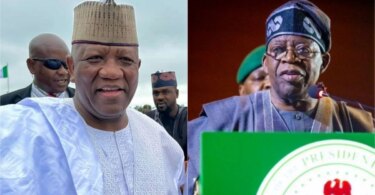
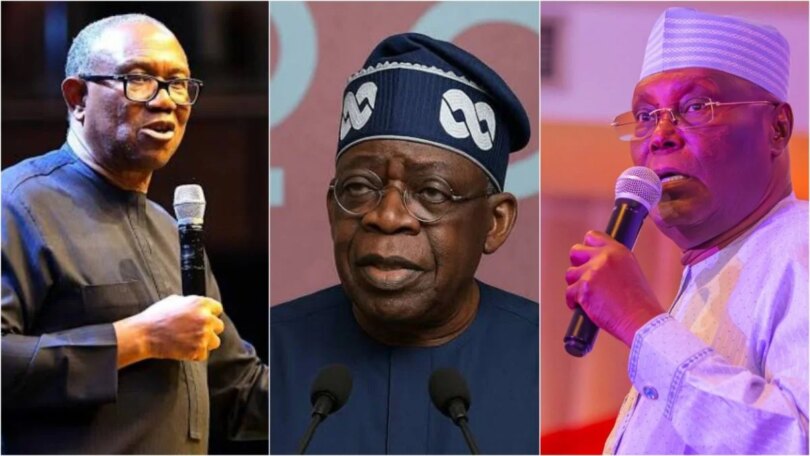
The Arewa Consultative Forum (ACF) has warned President Bola Tinubu and other politicians seeking elective office in 2027 that they must be ready to account for their past and allow Nigerians to scrutinise their records.
The ACF said voters have the right to examine the educational background, antecedents, integrity and personal history of anyone seeking to lead the country, particularly candidates aspiring to the presidency.
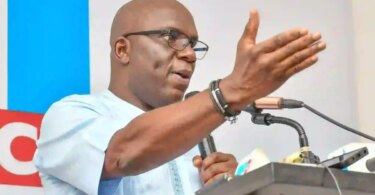
According to the Publicity Secretary of the forum, Prof. Tukur Baba, the issue should not be reduced to whether a candidate possesses the required certificates but the credibility and consistency of the candidate’s entire story.
He stated this on Tuesday while speaking on Arise Television’s Morning Show.
“If you are presenting yourself for election to the highest office in Nigeria, holding lives together, being the Commander-in-Chief, it is legitimate to ask questions,” he said.
According to him, Nigerians should be able to establish the history of politicians asking for their votes, stressing that transparency must be an important part of the leadership selection process.
“The certificate is not as important as the story itself. It has to be straight. It has to be consistent. If it is not, there is a problem,” Baba said.
He acknowledged that the 1999 Constitution does not expressly require presidential candidates to provide documentary evidence covering every stage of their educational history.
However, he maintained that the absence of such a specific constitutional requirement should not prevent Nigerians from asking questions about the background of candidates.
“The law is clear, but I want to move away from focusing just on the qualification. You see here, we practise a brand of politics that is different from all those countries you listed,” he said.
Baba compared Nigeria’s political system with countries where prospective leaders undergo lengthy processes of assessment and scrutiny before reaching the highest positions of authority.
“In China, you cannot just come from nowhere. You start from the very word and you climb. They have a very leadership selection process that you go through many years before you get to that point,” he said.
“By the time you get to the point of leadership, everything is known about you. Everything is scrutinised.”
The ACF spokesman said Nigeria had yet to establish a similarly strong culture of accountability because political standards were often compromised by the system and, in some cases, by voters themselves.
“We are simply flexible in our demands for accountability. There are no standards, and there are no standards because we do not demand standards,” he said.
Baba, however, said the ordinary Nigerian was ultimately more interested in the practical impact of government than in certificates alone.
“What matters to them is the effect of good governance,” he said.
He explained that Nigerians wanted political leaders capable of improving healthcare, education, housing, transportation and the general welfare of families.
“At the end of the day, what goes into my pocket? How is my family protected? Would my wife go to the hospital and expect service? Would my children receive quality education?” he asked.
He therefore urged politicians preparing for the 2027 election to be transparent about their backgrounds and give voters enough information to make informed decisions at the polls.
Baba said Nigerians deserved to know “who it is that they are voting for” before entrusting anyone with the enormous responsibility of governing the country.
The warning comes amid growing political debates over the records and policy positions of major contenders ahead of the 2027 presidential election.
One of the issues already dominating the political conversation is the removal of petrol subsidy by the Tinubu administration and whether the policy should be maintained, reversed or modified if there is a change of government in 2027.
The presidential candidate of the Nigeria Democratic Congress (NDC), Peter Obi, recently reiterated his support for the removal of petrol subsidy, although he criticised the Federal Government over what he described as the mismanagement of the resources generated from the policy.
Obi stated this on Monday during a panel session at the Nigerian Bar Association (NBA) Annual General Conference in Port Harcourt, Rivers State.
The former Anambra State governor said he had always supported subsidy removal, arguing that poor management of the proceeds should not be used as a reason to return to the old system.
“Well, I subscribe, and I maintain that you need to remove subsidy. Mismanagement of the proceeds should not be the reason for not removing it,” Obi said.
He argued that the government should have provided alternatives to cushion the effect of the policy on citizens while ensuring that the money saved was invested in sectors that would directly improve their lives.
“What we should have done is that when we remove subsidy, we would have given the people an alternative usage for the subsidy. What we have today is that that removal and attendant resources being recovered are also being mismanaged and stolen,” he added.
Obi said healthcare and other critical sectors should have received greater attention from the funds generated through the policy.
He also claimed that the Federal Government had reported receiving about N16 trillion from savings associated with subsidy removal and argued that Nigerians should be able to see how such funds were spent.
“It’s what you use the money for that is the problem,” Obi said, adding that part of the proceeds could also have been saved to strengthen Nigeria’s sovereign wealth position.
The subsidy debate has remained a major source of political disagreement since Tinubu announced its removal during his inauguration on May 29, 2023.
The policy led to a sharp increase in petrol prices and contributed to higher transportation and living costs, while the Tinubu administration has continued to defend the decision as necessary to reduce pressure on government finances.
Meanwhile, former Vice President Atiku Abubakar, the presidential candidate of the African Democratic Congress (ADC), has promised to reinstate petrol subsidy if elected, arguing that its removal under Tinubu has not produced the expected benefits for Nigerians.
Tinubu has criticised the proposal, arguing that a return to the subsidy regime would undermine efforts to reform the economy and reduce the financial burden it placed on government.
The president has also maintained that the subsidy system had put considerable pressure on government finances before his administration came into office, with several states struggling to meet salary and pension obligations.