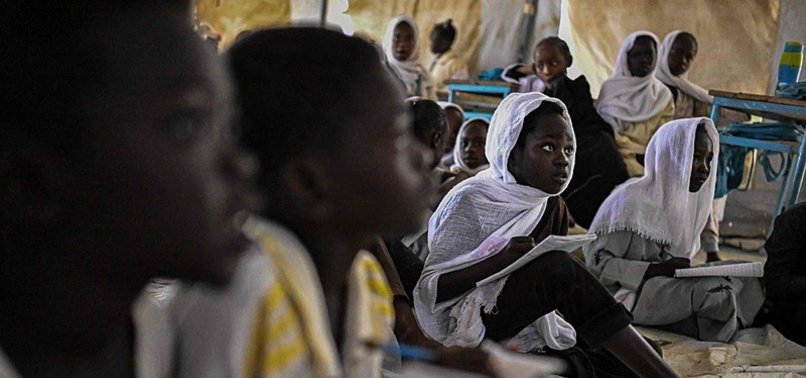
More than seven million people in conflict-torn South Sudan — around half the population — are in dire need of food aid, the United Nations warned on Friday.
The UN’s World Food Programme denounced the “alarming situation” in the world’s youngest sovereign state, saying the organisation was in “a tight race against time” to scale up its response.
“We are talking about 7.2 million people who are in urgent need of food assistance,” Mutinta Chimuka, WFP’s country director for South Sudan, told reporters in Geneva, speaking by video link from the city of Bor in South Sudan’s Jonglei state.
“The situation is critical and demands immediate attention to save lives of people who desperately need assistance,” she said in a statement.
The UN’s humanitarian aid chief Tom Fletcher warned last month that the east African country risked slipping into “full-scale famine and collapse”.
South Sudan gained independence from Sudan in 2011 but soon descended into civil war and remains mired in extreme poverty, corruption and insecurity.
A 2018 power-sharing deal between President Salva Kiir and his long-time rival, Riek Machar, has been unravelling since last year, with clashes in recent months bringing the country back to the brink of all-out civil war.
WFP said it had in particular scaled up its emergency response in Akobo, a hotspot of recent fighting in Jonglei state.
– Logistical problems –
It warned on Friday that hundreds of thousands of people in Jonglei were facing “catastrophic hunger and malnutrition”.
Some 12,000 of them were currently considered to be in the most serious phase of food insecurity, which Chimuka stressed was “extremely critical”.
“Particularly concerning is the sharp rise in severe malnutrition among children under five and breastfeeding mothers,” she told reporters.
Since WFP launched its emergency response in Akobo three weeks ago, it has reached over 60,000 people with aid, Chimuka said.
The UN agency and its partners have also conducted nutrition screening for 15,000 children and admitted 3,000 for treatment of moderate acute malnutrition, she said.
But she warned that the looming arrival of the rainy season was challenging humanitarian logistics, as was insecurity and the risk of renewed fighting.
A 33-truck convoy was due to deliver more than 200 metric tonnes of food assistance, nutritional supplies and 100 metric tonnes of relief items this week, after spending around two weeks on a route that usually takes three days to drive, Chimuka said.
WFP, which is also carrying out flights and airdrops to get the aid in, warned this might be its final road convoy before heavy rains render key roads impassable.
The agency said it urgently needed $266 million to continue providing its life-saving assistance.
“Our window is really, really very, very tight. So we need resources as soon as possible,” Chimuka said.
Without the funds, “drastic measures” would be required, she warned.
These would include further reducing ration sizes and “deprioritisation”, leaving many in need with no aid at all.