
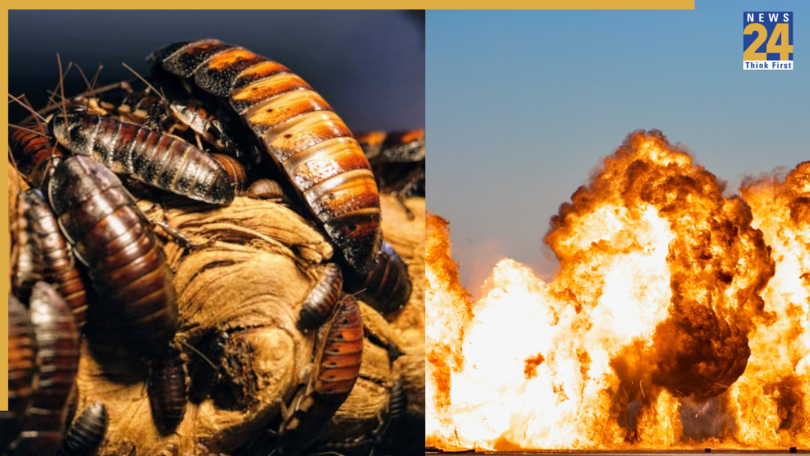
It is often believed that when a nuclear bomb explodes, all living organisms in the surrounding area are completely wiped out. However, this is not entirely true.Today, we will tell you about seven such creatures that are known to survive even extreme radiation from nuclear explosions. These organisms are incredibly resilient and are believed to be largely unaffected by such harsh conditions.
Braconid Wasps

2 / 8
Braconid wasps, which help in pollination, can survive radiation levels even twice as strong as the Hiroshima atomic bomb. They can tolerate around 180,000 rads of radiation—about 300 times more than humans. In comparison, the Hiroshima bomb released about 10,000 rads.
Tardigrades (Water Bears)

3 / 8
Tardigrades, also known as water bears, are extremely tough organisms. In an experiment by NASA, they survived in the vacuum of space without air or water. They can even come back to life after being inactive for up to 10 years, which is why nuclear radiation has little effect on them.
Cockroaches

4 / 8
Cockroaches, which are usually killed easily with pesticides, can survive radiation levels of up to 10,000 rads. After the Hiroshima bombing, cockroaches were found alive just 1,000 feet from the blast site. They can also live without food and water for about a month.
Fruit Flies

5 / 8
Fruit flies, which often trouble us during summer, can survive radiation levels of up to 64,000 rads. Even after exposure to such radiation, they can continue their life cycle of around 30 days.
Scorpions

6 / 8
Scorpions are believed to handle high levels of radiation, although there is no strong scientific proof. They are used to surviving harsh conditions, including strong sunlight and extreme temperatures, and can even survive being frozen for several days.
Mummichog Fish

7 / 8
The small mummichog fish is known for its ability to survive high radiation levels. It is one of the few fish sent to space. It can also live in highly polluted waters by adapting its genes to the environment.
Deinococcus radiodurans

8 / 8
Deinococcus radiodurans is considered the most radiation-resistant organism on Earth. It can quickly repair its damaged DNA, which helps it survive extreme radiation. It is also listed in the Guinness World Records for its exceptional resistance.