0
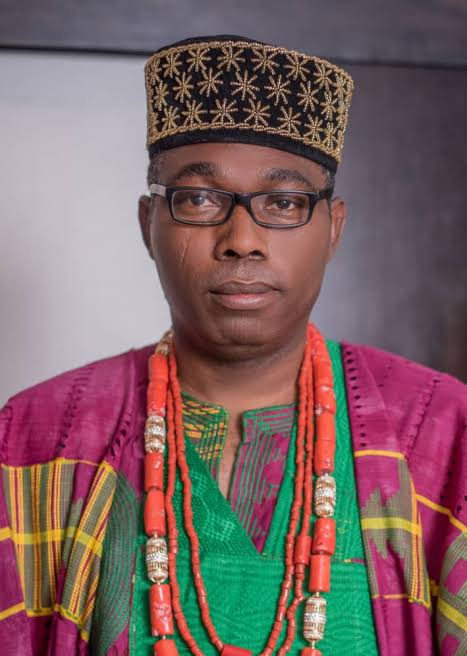
The presidential candidate of the Social Democratic Party (SDP), Prince Adewole Adebayo, has pledged to anchor his administration on the provisions of Nigeria’s Constitution, particularly Chapter Two, while promising sweeping reforms in governance, the economy, education, healthcare, and security if elected.
Speaking during his acceptance speech, Adebayo said his campaign and proposed government would be guided strictly by the Fundamental Objectives and Directive Principles of State Policy as contained in Sections 13 to 23 of the Constitution.
He emphasised that sovereignty belongs to the people, insisting that any mandate his party receives would derive directly from the electorate.
“There is a book that brought us together. It is called the Constitution of Nigeria. It says power belongs to the people of Nigeria and from them the government derives its authority. The SDP presidency will not snatch power; it will be freely given by the people,” he said.
Adebayo added that his administration would prioritise justice and social democracy, arguing that national resources must be deployed for the welfare and security of citizens.
He also criticised the ruling All Progressives Congress (APC), stating that ideological differences informed his party’s opposition to its governance philosophy.
According to him, Nigeria’s current political direction reflects a departure from the ideals of public service envisioned by past leaders.
The SDP candidate referenced historical figures such as Sir Ahmadu Bello, Dr Nnamdi Azikiwe, Chief Obafemi Awolowo, and Dr Michael Okpara, noting that each administration in Nigeria’s history had guiding principles.
He contrasted this with what he described as the absence of a clear ideological foundation in contemporary governance.
Adebayo argued that politics must be treated as a serious instrument of national development, warning that poor governance has direct consequences on security, education, healthcare, and the economy.
He cited ongoing security challenges in parts of the country as evidence of governance failure, insisting that effective leadership would restore stability and national confidence.
“The mandate you have given me will be used to articulate over 500 programmes aimed at reducing poverty to 2 per cent within 18 months of administration,” he said.
He also pledged to reduce unemployment to 4 per cent within two years through a comprehensive jobs and industrialisation programme.
On infrastructure, Adebayo promised to channel a portion of projected government savings into nationwide rural development, including road construction in all communities.
In education, he proposed a free and compulsory system from primary to tertiary level, with an integrated pathway to employment, stating that “graduation is only complete when a job is secured.”
On healthcare, he promised universal access to quality and affordable services, including regular nationwide medical screening, with the National Identification Number (NIN) serving as a health insurance identifier.
Adebayo also pledged to revive moribund national assets and industries, including steel, textile, paper and sugar complexes, as part of efforts to boost industrial productivity and job creation.
He further promised to strengthen national security, insisting that no part of the country would be allowed to fall under the control of armed groups.
He concluded by recalling his past involvement in international peace and reconstruction efforts, including assignments under the United Nations and ECOWAS in post-conflict Liberia, expressing concern over what he described as the difficulty of movement within his own country amid insecurity.
Adebayo said his proposed administration would restore dignity, opportunity and stability to Nigeria through disciplined leadership and constitutional governance.