India and Japan are now taking their economic partnership beyond roads, metros and bullet trains, with a strong focus on semiconductors, artificial intelligence (AI), supply chains and clean energy.
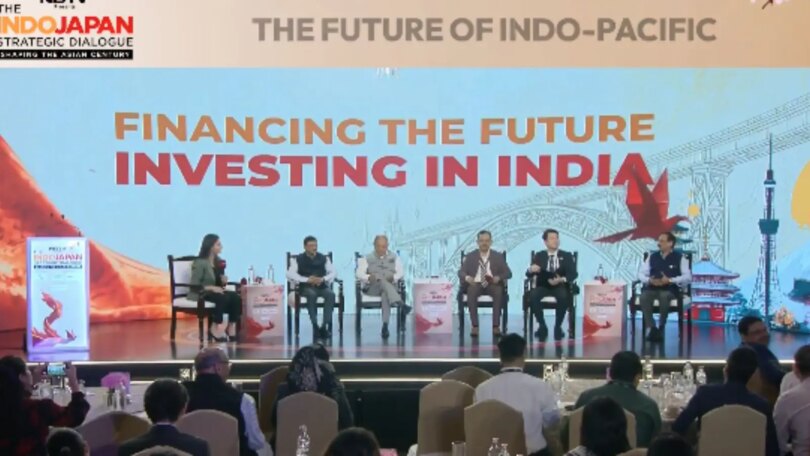
Speaking at NDTV’s Indo-Japan Strategic Dialogue, Japan International Cooperation Agency (JICA) Senior Representative Yosuke Sato said that India is Japan’s biggest development partner, adding JICA has invested over Rs 4.6 lakh crore in India in the past 68 years and is currently working on around 120 projects.
#IndoJapanStrategicDialogue | Financing The Future: Investing In India | As India And Japan Look Ahead, Experts Discuss How High-Quality Investments Can Shape The Next Chapter Of Economic Cooperation
On Panel with @GaurieD: Former Ambassador to Japan Amb. Sanjay Kumar Verma,… pic.twitter.com/uhW2rc5yeH
— NDTV (@ndtv) July 2, 2026
He was part of a panel comprising former Ambassador to Japan Sanjay Kumar Verma, former government secretary Ravi Capoor, IESA and SEMI India President Ashok Chandak, and DMRC Managing Director Dr Vikas Kumar.
Sato said projects such as the Delhi Metro were examples of successful India-Japan cooperation. He added that Japan now wanted to focus on improving the quality of infrastructure and bringing in more private investment.
Delhi Metro Rail Corporation (DMRC) Managing Director Dr Vikas Kumar said Japanese support helped India build one of the world’s biggest metro networks. He said Japan contributed not just money but also technology, project management and better construction practices.
He suggested that more Japanese companies should manufacture metro equipment in India so that it can also be exported to other countries. This, he said, would lower costs and allow India to export metro technology to Southeast Asia and Africa.
The Delhi Metro now operates over 416 km of network and serves around 6.5 million passengers every day, Kumar said.
Former Indian Ambassador to Japan Sanjay Kumar Verma said, “India and Japan are now working together to build stronger supply chains, improve economic security and create trusted partnerships in the Indo-Pacific region.”
He added Japan has been supporting India’s development for more than six decades through Official Development Assistance (ODA), noting that Japan started providing this assistance to India in the late 1950s. Since then, it has invested around $58-60 billion (about Rs 5.7 lakh crore).
Former government secretary Ravi Capoor said Northeast India is India’s natural gateway to Southeast Asia because it shares borders with countries like Myanmar. But for trade, he said, there must be good physical connectivity such as highways, railways, airports and border roads. He said Japan can play a major role by investing in infrastructure in the Northeast.
“The Northeast can become India’s biggest growth engine over the next 40 to 50 years, but only if India and Japan invest more in roads, airports, trade routes and industries to connect it with Southeast Asia,” he stated.
Sato added that JICA had already invested around Rs 28,000 crore in Northeast India. He said the next step was to encourage private companies to invest, especially in the semiconductor sector.
Ashok Chandak, President of the India Electronics and Semiconductor Association (IESA), said semiconductors are now critical for economic growth, AI and national security. He said semiconductors are becoming important for every industry, from smartphones and cars to AI and healthcare.
Chandan also revealed that around 150 Japanese companies have shown interest in investing or partnering with Indian firms in the semiconductor sector. He said Japan still controls nearly 45% of the global semiconductor supply chain through equipment, chemicals and materials needed to manufacture chips.