In a sign of a major foreign policy reset by Dhaka following the ouster of Sheikh Hasina in August 2024, a group of Bangladeshi civil servants has begun mid-career training in Pakistan, marking a first between the two nations.
The new training programme replaces – for the time being, at least – the pre-2024 arrangement with India, which hosted Bangladeshi officials at the Lal Bahadur Shastri National Academy of Administration in Mussoorie, a hill station in the northern Indian state of Uttarakhand.
Twelve senior bureaucrats, including one additional secretary and 11 joint secretaries, are participating in the programme at Lahore’s Civil Services Academy, marking the first structured initiative of its kind.
Analysts say the shift reflects Dhaka’s attempt to diversify its bureaucratic exposure and strengthen ties with Islamabad after years of strained relations under the previous pro-India regime.
Pakistan is bearing all expenses for the training.
No Bangladeshi bureaucrat has attended a training programme in India since the fall of the Hasina government nearly two years ago.
India is reportedly eager to invite Bangladeshi civil servants for training, even though the relevant agreement between New Delhi and Dhaka expired in April 2025 and hasn’t been renewed.
Bangladesh’s Ministry of Public Administration did not respond to a query about whether Dhaka plans to resume its Mussoorie programme going forward.
The shift comes amid a broader diplomatic reset, as high-ranking Pakistani officials have visited Dhaka, direct flights between Dhaka and Karachi have restarted, and talks are underway about Bangladesh buying Pakistani fighter jets.
Meanwhile, Bangladeshis have welcomed Pakistani scholars in large public rallies. Pakistani businesses have also expanded operations in post-Hasina Bangladesh.
Related
Asif Bin Ali, a Bangladeshi geopolitical analyst associated with Georgia State University in the US, tells TRT World that the development is a signal of Dhaka’s changing foreign policy priorities.
“Bangladesh is trying to show that India will no longer remain the default destination for bureaucratic training and administrative exposure,” he says.
Bangladesh-India ties improved to unforeseen levels after 2009 when Hasina returned to power in Dhaka, with the two countries forging a deep economic and security partnership.
Her rule was characterised by unchecked Indian influence, economic dependency, and overt political meddling, alienating parts of Bangladeshi society.
Hasina and Indian Prime Minister Narendra Modi, who has been in power since 2014, have enjoyed a close relationship that stems from their similar positions on issues such as the handling of opposition and Muslim religious parties.
But the ouster of Hasina’s government in 2024 on the heels of an India Out campaign put the close alliance between Dhaka and New Delhi in jeopardy.
“The Lahore programme also reflects the practical consequences of post-Hasina diplomatic strains, visa difficulties, and the interruption of earlier training arrangements with India,” Ali says.
He notes that the move should not be viewed as a direct snub to India but rather a low-cost diplomatic message.
Dhaka wants more room for manoeuvre, including with Pakistan, without formally abandoning its engagement with New Delhi, he says.
This perspective aligns with the positive trajectory of Dhaka-Islamabad relations since Hasina’s 2024 ouster.
Under the interim administration of Muhammad Yunus, which governed the country from August 2024 to February this year, Bangladesh swiftly moved to diversify its alliances, with Pakistan emerging as its key regional partner.
High-level military visits led to talks for a potential defence pact, including the sale of JF-17 fighters co-developed by Pakistan and China.
Economic ties are flourishing with the resumption of direct trade and Pakistani businesses gaining a foothold in Dhaka.
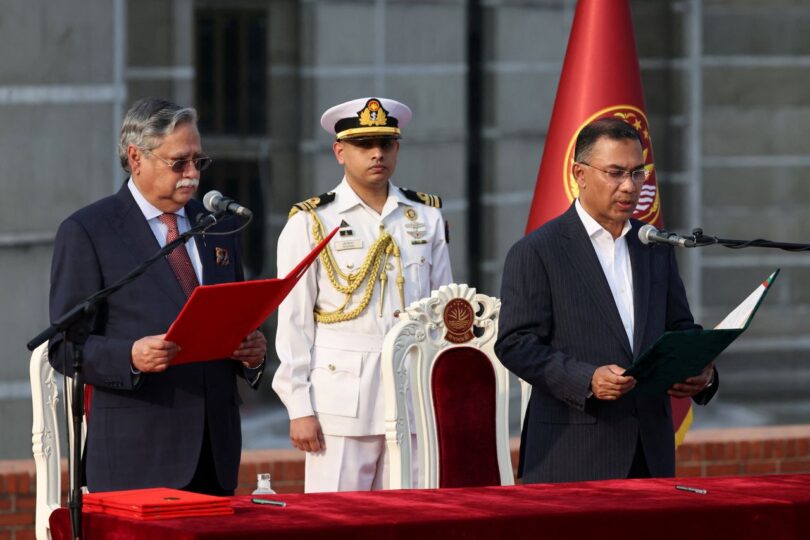
Bangladesh’s conciliatory approach towards Islamabad continues under the present government led by Tarique Rahman, who came to power after winning a general election three months ago.