Nigeria has called for stronger international investment in education, saying domestic efforts by governments must be matched by predictable global support to transform schools and expand opportunities for children and young people….
Nigeria has called for stronger international investment in education, saying domestic efforts by governments must be matched by predictable global support to transform schools and expand opportunities for children and young people.
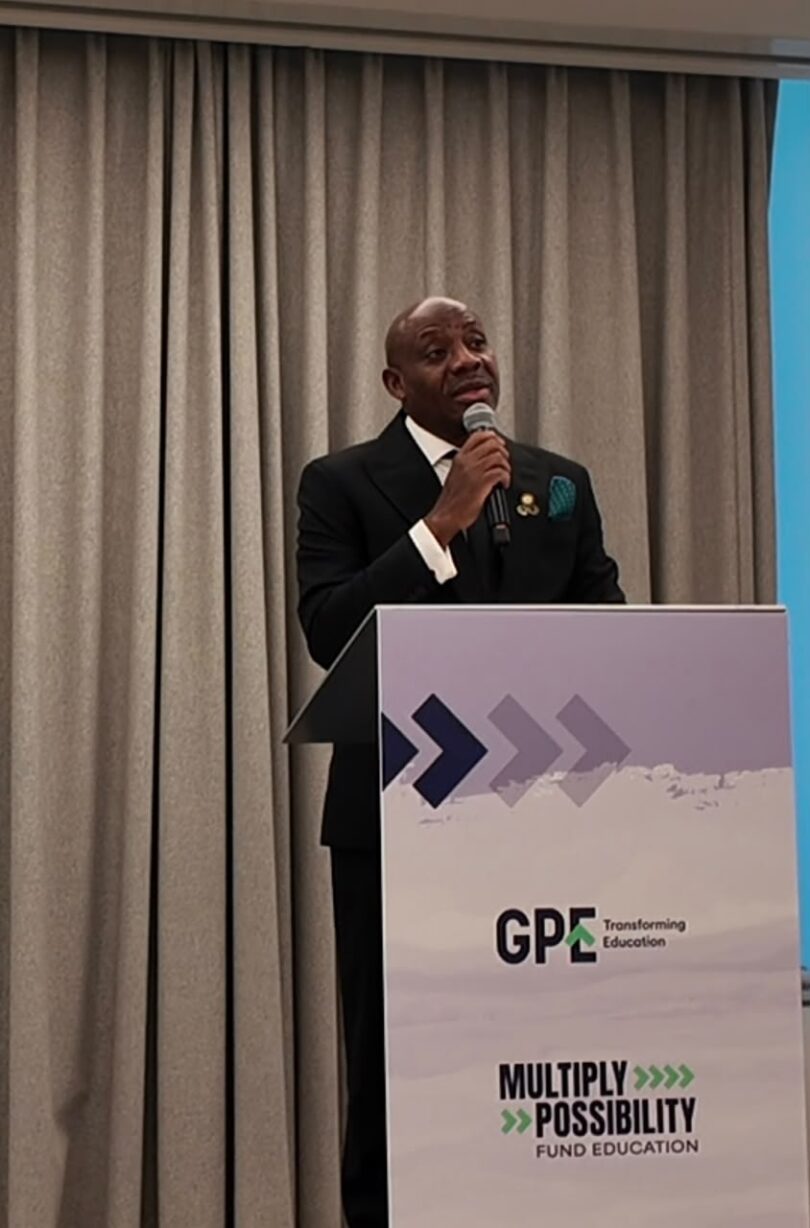
Minister of Education, Dr Maruf Tunji Alausa, made the call in New York while delivering Nigeria’s opening remarks at the Global Partnership for Education (GPE) Multiply Possibility financing campaign, which Nigeria is co-hosting with Italy.
Alausa said Nigeria accepted the co-hosting role because of its belief that education and skills development are critical to harnessing the potential of young populations, strengthening economies and building a sustainable future.
He said Nigeria was also backing its global advocacy with domestic financing commitments for education through 2030.
According to the minister, the commitments bring together Federal Government expenditure projections and financing commitments at state level, reflecting the structure of Nigeria’s federal system and the need to mobilise resources across all tiers of government.
Alausa said 50 GPE partner countries had collectively committed more than $400 billion in domestic financing for education through 2030.
He, however, stressed that domestic financing alone would not be sufficient to deliver the scale of transformation required.
“Domestic efforts must be matched by effective international support,” the minister said.
He urged governments, development partners, philanthropic organisations and the private sector to sustain the momentum behind the Multiply Possibility campaign and support the forthcoming high-level financing event.
The GPE campaign aims to raise $5 billion and unlock an additional $10 billion in co-financing to support education systems serving about 750 million children in 96 countries.
A high-level GPE financing event is scheduled for Wednesday, September 23, in New York, bringing together governments, international organisations, development banks, civil society, philanthropies and private-sector representatives.
Alausa said the focus should ultimately move beyond pledges to measurable improvements in classrooms and opportunities for learners.
He described GPE as an important platform for bringing governments and development partners together around nationally determined education priorities.
The minister also highlighted Nigeria’s domestic education reforms, including efforts to expand access, reduce cost barriers, strengthen skills development and use digitalisation to improve the education system.
He said these measures were part of the Federal Government’s broader agenda for inclusive economic growth.
The campaign comes as education systems in low- and lower-middle-income countries face pressure from constrained public finances, debt burdens, conflicts, climate-related emergencies and declining development assistance.
Nigeria and Italy launched the current GPE financing campaign at the United Nations General Assembly in 2025, with the initiative designed to mobilise resources for education through 2030.
Alausa reaffirmed Nigeria’s commitment to strengthening its education system and expanding opportunities for children and young people, while calling for international partners to complement national financing efforts.