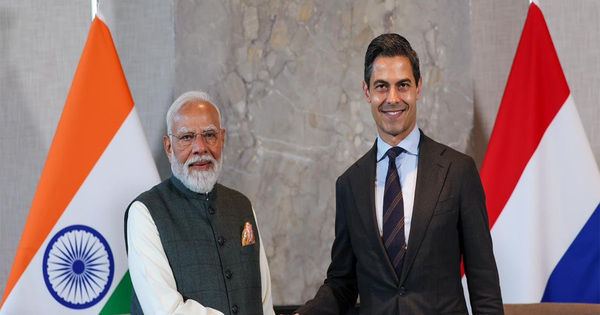
The Hague [Netherlands], May 17 (ANI): Infusing fresh vitality into the diplomatic and economic alignment between the two nations, Prime Minister Narendra Modi’s high-profile official visit to the Netherlands has culminated in the historic elevation of bilateral ties to a Strategic Partnership.
Setting an ambitious template for future engagement, the transition marks a transformative shift in strategic dynamics, backed by a shared roadmap targeting next-generation industries, climate resilience, and maritime security.
In a post on X, PM Narendra Modi shared, ‘My Netherlands visit has added new momentum to India-Netherlands ties. From elevating our relationship to a Strategic Partnership to expanding cooperation in water resources, semiconductors, innovation, defence, sustainability and mobility, we have charted an ambitious roadmap for the future.’
https://x.com/narendramodi/status/2055955754780147773?s=20
He further added, ‘I express my gratitude to PM Rob Jetten for the warm hospitality and for personally coming to the airport to bid farewell. I am confident that the friendship between India and the Netherlands will continue to grow stronger in the years to come.’
This renewed momentum was vividly demonstrated on the ground when PM Narendra Modi visited the historic Afsluitdijk dam, bringing international attention to long-term water management and climate resilience, drawing critical parallels to major infrastructural blueprints back home.
Accompanied by Dutch Prime Minister Rob Jetten, PM Narendra Modi inspected the expansive barrier dam, which has shielded the low-lying European country from catastrophic flooding for decades while simultaneously facilitating inland navigation, freshwater storage, and clean energy generation.
The high-profile site visit carries profound significance as the MEA highlighted its direct engineering relevance to Gujarat’s ambitious Kalpasar Project, a proposed freshwater reservoir and dam system across the Gulf of Khambhat.
Reflecting on the tour, PM Narendra Modi emphasised the global value of Dutch expertise via a post on X, stating, ‘An area in which the Netherlands has done pioneering work is water management. The entire international community can learn a great deal from this. This morning I had the chance to visit the Afsluitdijk and gain insight into the key features of this project. I am grateful to Prime Minister Rob Jetten for accompanying me here. We are committed to bringing modern technology to India, designed to assist with irrigation, flood protection, and the expansion of the inland waterway network.’
Echoing this sentiment, MEA spokesperson Randhir Jaiswal described the engagement as an avenue for robust Indo-Dutch environmental and technological collaboration.
In a post on X, Jaiswal noted, ‘A symbol of engineering excellence and innovation! Accompanied by PM Rob Jetten of the Netherlands, PM @narendramodi visited the iconic Afsluitdijk Dam, a symbol of Dutch excellence in water management, flood protection and freshwater storage. The visit highlighted the relevance of Dutch expertise for India’s Kalpasar Project in Gujarat, which aims to create a freshwater reservoir and dam near the Gulf of Khambhat.’
Spanning 32 kilometres, the Afsluitdijk remains a cornerstone of the centuries-long Dutch battle against rising sea levels, separating the North Sea from the freshwater IJsselmeer lake.
Currently undergoing a massive modernisation framework known as ‘Afsluitdijk 2.0’, the dam is being retrofitted to survive storms that statistically occur only once in 10,000 years, featuring smart water-discharge mechanisms, fish migration pathways, and advanced tidal and solar energy installations.
Following the conclusion of this high-stakes itinerary, PM Narendra Modi was seen off by Netherlands PM Rob Jetten at Schiphol Airport, setting off for Gothenburg, Sweden, to continue his European tour at the invitation of Swedish Prime Minister Ulf Kristersson.
The engineering inspection capped off an intense diplomatic schedule where India and the Netherlands officially elevated their relationship to a strategic partnership, executing 17 bilateral agreements to supercharge cooperation in defence, critical minerals, and emerging technologies.
During their comprehensive discussions, the two leaders expressed deep concern over the volatile situation in West Asia, noting its severe implications for the wider world, particularly regarding trade network disruptions and global energy supplies.
In an explicit joint directive, PM Narendra Modi and PM Rob Jetten called for freedom of navigation and global flow of commerce through the Strait of Hormuz, while opposing any ‘restrictive’ measures, and reaffirmed their support for ongoing initiatives in this regard.
The geopolitical call for shipping protection follows severe disruptions along the strategic waterway after a joint US-Israeli military offensive against Iran sparked retaliatory exchanges.
The two heads of government also evaluated the ongoing conflict in Ukraine, resolving to maintain continuous support for initiatives aimed at securing a comprehensive, just, and lasting peace through dialogue and diplomacy, rooted firmly in the principles of the UN Charter and international law.
The diplomatic breakthrough at The Hague has formally established a strategic partnership roadmap focusing on semiconductors, AI, quantum computing, and space, alongside launching an ambitious ‘India-Netherlands roadmap on the development of green hydrogen’ and exploring a defence industrial framework for joint manufacturing and technology transfers.
The Netherlands remains a premier economic anchor for New Delhi in Europe, with bilateral trade reaching USD 27.8 billion in 2024-25 and cumulative foreign direct investment touching USD 55.6 billion, utilising the world-class Port of Rotterdam as a crucial logistical gateway.
Beyond commercial exchanges, the newly signed pacts focus on agriculture, healthcare, and a key migration and mobility agreement to streamline professional and educational transit for Indians.
Emphasising regional stability, both leaders advocated for a free, open, and peaceful Indo-Pacific based on sovereignty, territorial integrity, and the ‘absence of coercion and conflicts’, a veiled reference to mounting anxieties regarding China’s assertive maritime behaviour.
The comprehensive joint statement further detailed mutual efforts to integrate critical mineral value chains and link the Dutch Semicon Competence Centre to the Indian Semiconductor Mission to drive industrial innovation, while leveraging the freshly executed India-EU Free Trade Agreement to unlock further commercial expansion.
PM Narendra Modi expressed gratitude to PM Rob Jetten for the Netherlands’ enduring backing of India’s permanent membership in a reformed UN Security Council, while the Dutch leader strongly condemned the ‘heinous and abhorrent’ Pahalgam terrorist attack, extending unwavering support against cross-border terrorism.
Underscoring a decade of strong diplomatic acceleration, PM Narendra Modi observed that ‘there has been significant progress in India-Netherlands ties in the last one decade’, emphasising that deeply rooted historical and people-to-people relations are bound by shared democratic values, market economy, and responsible behaviour, and called for combining Dutch expertise with Indian ‘speed and skill’ to take the new strategic partnership to unprecedented heights. (ANI)