That would have pleased President Xi Jinping. However, it probably alarmed Japanese Prime Minister Sanae Takaichi, Philippine President Ferdinand Marcos Jnr and Taiwan’s leader William Lai Ching-te. The trio seem to have been coordinating on a united front against Beijing from an old American script. Perhaps they haven’t received the latest memo.
Hegseth did offer the obligatory warning about “rightful alarm” at China’s military build-up. Then again, the same White House has demanded that Asian allies spend 3.5 to 5 per cent of their gross domestic product on their militaries. One can hardly expect China to stand still while its neighbours plan to rearm. Still, Hegseth’s softer tone is notable, and it’s surely a good thing whenever tensions between the two superpowers are lowered.
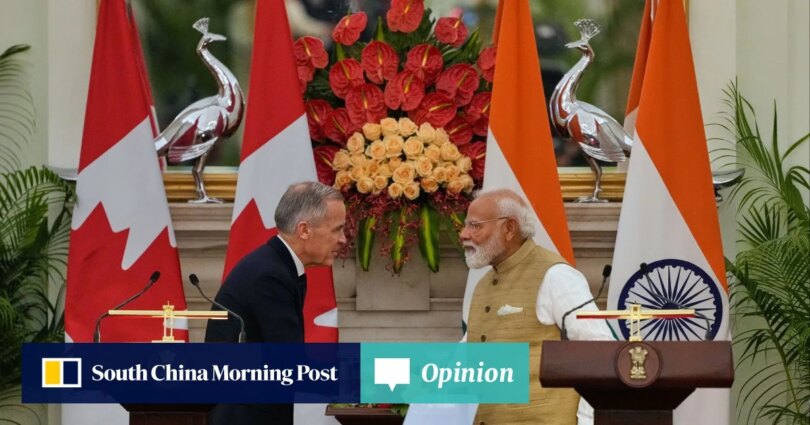
Canada’s “strategic partnership” with China has been a long time coming. Carney’s predecessor, Justin Trudeau, first came into office in 2015 promising to improve relations with Beijing and promote bilateral trade. He ended up worsening relations to a level not seen in decades – if ever – following the arrest of Meng Wanzhou, Huawei’s chief financial officer and daughter of the company’s founder, at the request of US law enforcement. Beijing subsequently detained two Canadians whom it accused of having worked as spies.