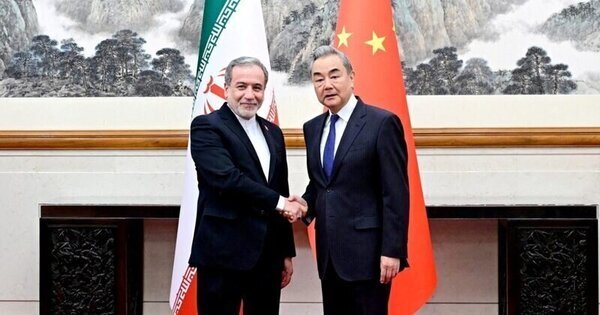
Beijing has reiterated its call for a comprehensive cease-fire in the Iran-US conflict and for a return to normal passage through the Strait of Hormuz as Iranian Foreign Minister Abbas Araqchi kicked off his first visit to China since the conflict erupted at the end of February.
Foreign Minister Wang Yi said after a meeting with Araqchi on May 6 in the Chinese capital that China will work harder to help bring an end to the fighting and play a greater role in restoring peace and tranquility to the Middle East.”
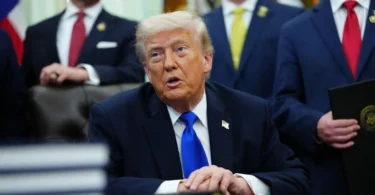
“China believes that a complete cessation of hostilities is imperative, restarting the conflict is unacceptable and persisting in negotiations is particularly important,” Wang said, according to a statement from his ministry after the talks, which come one week before US President Donald Trump is scheduled to meet his Chinese counterpart Xi Jinping.
Araqchis meeting with Wang came amid media reports that Tehran and Washington are close to an agreement on a one-page memorandum to end the war in the Gulf.
SEE ALSO:
Trump Says US Will Pause Operation To Guide Ships Through Hormuz Strait
US media outlet Axios was the first to report on the proposed memorandum. Officials in Washington were not immediately available to comment.
Among other provisions, Axios said in its report that the agreement would include Iran committing to a moratorium on nuclear enrichment, the United States agreeing to lift sanctions and release billions of dollars in frozen Iranian funds, and both sides lifting restrictions around ships sailing through the Strait of Hormuz.
Political commentators in Iran have broadly welcomed Araqchis visit to Beijing, describing it as an essential counter-move ahead of the meeting between Trump and Xi.
Writing on X, analyst Mostafa Najafi said the timing of the visit was critical, warning that “passivity and a lack of initiative” between now and Trump’s arrival in Beijing “could be dangerous.”
Najafi flagged ongoing USefforts to drafta new UN Security Council resolution targeting Iran over the Strait of Hormuz, framing Araqchi’s trip as necessary pre-emption of American attempts to shape China’s Iran policy before the Trump-Xi talks.
Strategist Mostafa Kharratian argued that the visit must serve as a launchpad for full-scale bilateral and trilateral strategic dialogue among Tehran, Beijing, and Moscow.
He contended that Washington’s core assumption — that Iran will capitulate first in an economic war of attrition — can be broken, if Tehran secures Chinese financing of around $20 billion to offset the impact of the US naval blockade.
Kharratian also pointed to recent signals from both Moscow and Beijing, including Russia’ssenior-level receptionof Araqchi and China’sunprecedented activationof its sanctions-blocking statute, as evidence that conditions for a coordinated response to US pressure are in place.
Commentator Erfan Ebrahimi drew a contrast with Pakistan’s mediation role, arguing that Beijing — unlike Islamabad — carries sufficient political weight to act as both initiator and guarantor of any eventual agreement between Iran and the United States to end the war.
With reporting by Kian Sharifi and Reuters
Beijing Urges Immediate Cease-Fire In Iran As Trump-Xi Summit Nears
Share
Share
Copy link
Facebook
X (Twitter)
LinkedIn
Email
Share
Share
Copy link
Facebook
X (Twitter)
LinkedIn
Email