
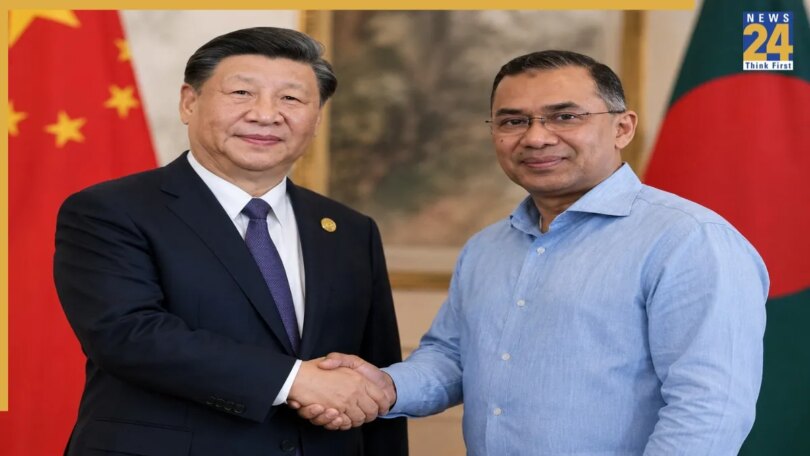
Bangladesh’s new government led by Tarique Rahman has formally invited China to take part in the Teesta River restoration project, a move that could impact its relations with India. The proposal was discussed during a meeting between Bangladesh Foreign Minister Khalilur Rahman and Chinese Foreign Minister Wang Yi in Beijing.
Why is the Teesta River project so important?
The Teesta River originates in the eastern Himalayas and flows through Sikkim and West Bengal before entering Bangladesh. It is a lifeline for agriculture and supports millions of people, especially farmers who depend on its water for irrigation. Because the river is shared, any development project on it has regional importance.
China has shown strong interest in the Teesta River Comprehensive Management and Restoration Project (TRCMRP) for years. During the meeting, Wang Yi said China is ready to support Bangladesh through infrastructure development, economic cooperation, and investment under its broader global initiatives.
Could this affect India-Bangladesh ties?
The development comes at a sensitive time. After the fall of Sheikh Hasina, the interim government led by Muhammad Yunus had moved closer to China and Pakistan, which created some strain in ties with New Delhi. India has also been actively trying to strengthen cooperation with Bangladesh, especially on river water sharing.
In 2024, India offered technical help for the Teesta basin. The Teesta project is also strategically sensitive as it is located near the Siliguri Corridor, often called the “Chicken’s Neck,” which connects mainland India to its northeastern states.
China has clarified that its cooperation with Bangladesh is not aimed at any third country. Still, its growing presence in South Asia, including investments and loans, is closely watched by India. Bangladesh has also reaffirmed its support for China’s One-China policy, strengthening bilateral ties.