
The result is that a growing number of traders, particularly in markets where regulatory action has been sharp and sudden, have begun using proxy servers to manage their connection to the exchange. The practice is more common than most traders will admit publicly. This article walks through why it is happening, the actual mechanics, the risks that come attached, and what to check before setting anything up.
Binance operates in more than 100 countries, but the list of jurisdictions with full or partial blocks has been growing rather than shrinking. It is worth understanding that a full block is only one form of restriction.
For Nigerian traders in particular, the ongoing tension between the Central Bank of Nigeria, the Securities and Exchange Commission and international exchanges has produced a shifting landscape. Access that works today is not guaranteed to work next month, and prudent traders have started to prepare for both scenarios.
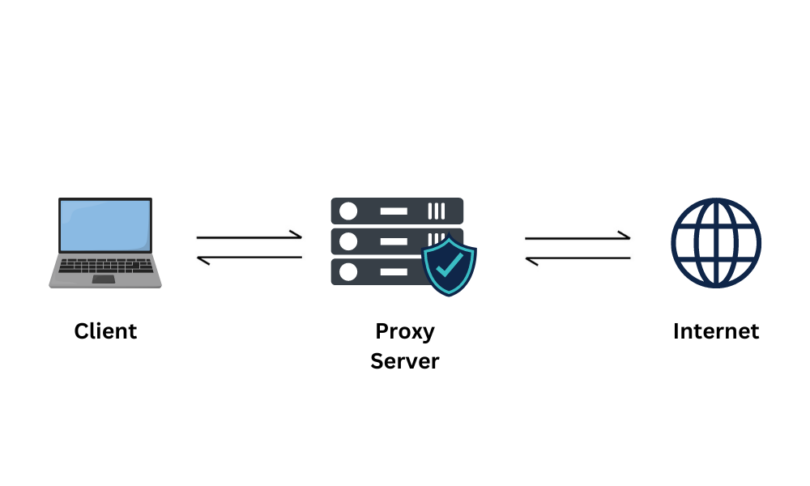
A Binance proxy server sits between your device and the exchange. Instead of your real IP address reaching Binance, the proxy’s IP does. From Binance’s perspective, the connection appears to originate wherever the proxy is located. For traders in restricted regions, this becomes a way to route their connection through a country where the exchange remains accessible.
Geographic access is not the only reason traders use proxies, though it is the most common.
Binance allows 1,200 requests per minute per IP. For traders running bots across multiple pairs simultaneously, that ceiling is reached quickly. Rotating proxies spread requests across different IPs so the bot continues without being throttled.
Binance tracks multiple accounts originating from the same IP address. Traders operating several accounts use different proxies for each to keep the accounts from being associated with one another.
Available tokens, trading pairs and pricing vary across regions. Traders can view and interact with region-specific offerings by routing through the relevant location.
Real-time price feeds and order book data run over WebSocket connections. Binance may throttle these if requests from a single IP look irregular. Clean residential IPs help hold those streams stable and reduce reconnection loops.
IP is only one factor. On mobile, Binance also verifies GPS location, SIM card country code and device fingerprint. Mismatches raise flags. A proxy IP that shows the United States while the SIM card is registered in a restricted country is exactly the kind of inconsistency the system is designed to catch.
Changing IPs while already logged in is one of the fastest ways to receive an additional verification prompt or a temporary account freeze. This is why sticky sessions matter — holding a single IP for an extended period rather than rotating aggressively.
Not every proxy IP is clean. Shared or previously compromised addresses may already have a history of suspicious activity attached, and Binance may have flagged them before you connect. A provider with a well-maintained IP pool reduces this risk substantially.
Binance may freeze accounts quickly if it detects unusual activity or determines that the account is being accessed from a restricted region. Recovery through support can take time, and in some cases access is not restored at all.
Residential proxies use IP addresses assigned to real home internet connections. They appear as normal user traffic and are much harder for Binance to flag. This is the most common recommendation for traders needing consistent access. They are slower than datacenter and more expensive.
Mobile proxies use IPs from real cellular carriers. Because mobile networks share IPs across many users naturally, distinguishing individual traffic is difficult. These are the strongest choice for traders in higher-risk areas who prioritise clean connections. They are also the most expensive option.
Datacenter proxies are fast and cheap, but Binance has invested heavily in detecting them. They originate from server farms rather than real devices, which makes them straightforward to identify as non-human traffic. They can still work for casual browsing and API data collection, but they are more likely to be blocked for account access in restricted regions.
If your account was verified with documents from one country and your proxy routes you through another, the mismatch can trigger review. Choose a proxy address that lines up with the country on your account.
Proxies that rotate IPs frequently are useful for scraping and bot work, less useful for logins. For anything involving direct account access, use sticky sessions that hold the same IP throughout the session. Quality providers offer sessions up to 24 hours.
Before using real money, confirm that the proxy is not leaking your real IP and is functioning as expected. A basic IP leak test will show what Binance actually sees when you log in. Several free tools online can display your visible IP and location.
If you are using the Binance app on a mobile device, turn off location services for the app. GPS data reveals your true location, and if it does not match the proxy location, Binance’s system will notice.
Avoid free proxies. Their reputations are almost universally poor and their integrity questionable. Paid providers maintain IP pools and replace flagged addresses on an ongoing basis. Look for providers who are transparent about how they source IPs and who offer some form of IP quality filtering.
Proxy servers can be useful for traders dealing with Binance connectivity issues, but they are not a guaranteed solution and they come with real risks. The platform’s detection systems are more sophisticated than most users realise, and a poorly configured setup can create more problems than it solves, from repeated verification prompts to account freezes.
If you go this route, the setup matters more than the proxy itself. Having a proxy is not enough. Match the proxy location to your KYC country, use sticky sessions, and choose a provider with clean IPs for stability.
For most traders, residential proxies are the sensible starting point. They are reasonably reliable, sufficiently anonymous, and priced within reach. Traders in higher-risk regions or those needing additional trust signals may consider mobile proxies. Datacenter proxies are best reserved for tasks that do not involve direct account access.
The Nigerian context in particular calls for caution. Regulatory positions can change quickly, and traders who set up their connectivity today should also be prepared for the possibility that the ground shifts again. Backup plans, cold storage discipline, and awareness of the local legal landscape are as important as any proxy configuration.