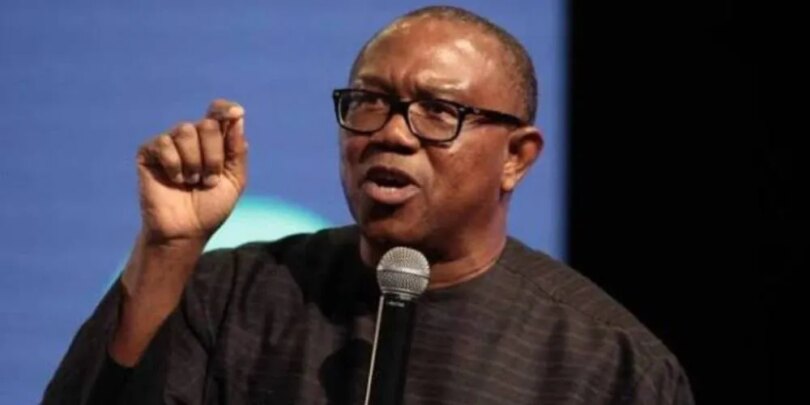
Former presidential candidate Peter Obi has announced his exit from the African Democratic Congress (ADC), citing a toxic political environment, internal crises, and what he described as external interference undermining party stability.
In a personally signed statement on Sunday, Obi said his decision was driven not by personal grievances against party leaders but by a growing pattern of division, suspicion, and systemic disruption that has made it difficult to pursue genuine nation-building.
“Let me state clearly: my decision to leave the ADC is not because our highly respected Chairman, Senator David Mark, treated me badly, nor because my leader and elder brother, Alhaji Atiku Abubakar, or any other respected leaders did anything personally wrong to me,” Obi said. “I will continue to respect them.”
The former Anambra State governor, however, warned that the same forces he blamed for destabilising the Labour Party appear to be resurfacing within the ADC.
“However, the same Nigerian state and its agents that created unnecessary crises and hostility within the Labour Party that forced me to leave now appear to be finding their way into the ADC, with endless court cases, internal battles, suspicion, and division,” he stated.
Obi described Nigeria’s broader political climate as increasingly hostile to sincerity and reform-minded leadership, lamenting that “intimidation, insecurity, endless scrutiny, and discouragement have become normal.”
“We now live in an environment that has become increasingly toxic, where the very system that should protect and create opportunities for decent living often works against the people,” he added.
Reflecting on his personal experience within political structures, Obi suggested that even allies sometimes contribute to the pressures reformers face.
“More painful is when some of those you associate with, believing you would find understanding and solidarity among them, become part of the pressure you face,” he said. “Some who publicly identify with you privately distance themselves or join in unfair criticism.”
He further decried what he sees as a distortion of values in Nigeria’s political culture.
“We live in a society where humility is mistaken for weakness, respect is seen as a lack of courage, and compassion is treated as foolishness,” Obi noted.
“A system where treating people equally is questioned simply because you refuse to worship status, tribe, class, or power.”
Despite his exit, Obi insisted his political ambition is not driven by a quest for power but by a desire to see meaningful change in the country.
“Let me assure all that I am not desperate to be President, Vice President, or Senate President. I am desperate to see a society that can console a mother whose child has been kidnapped or killed,” he said.
“I am desperate to see a Nigeria where people will not live in IDP camps but in their homes. I am desperate for a country where Nigerian citizens do not go to bed hungry.”
Obi also spoke about the personal toll of his political journey, describing “silent pains,” “emotional burdens,” and “quiet battles” faced while trying to serve sincerely under difficult conditions.
“There are moments I ask God in prayer: Why is doing the right thing often misconstrued as wrongdoing in our country?” he said. “Why is integrity not valued?”
He concluded by reaffirming his belief in Nigeria’s potential despite the challenges.
“Yet, despite everything, I remain resolute. I firmly believe that Nigeria can still become a country with competent leadership based on justice, compassion, and equal opportunity for all,” Obi said. “A new Nigeria is possible.”