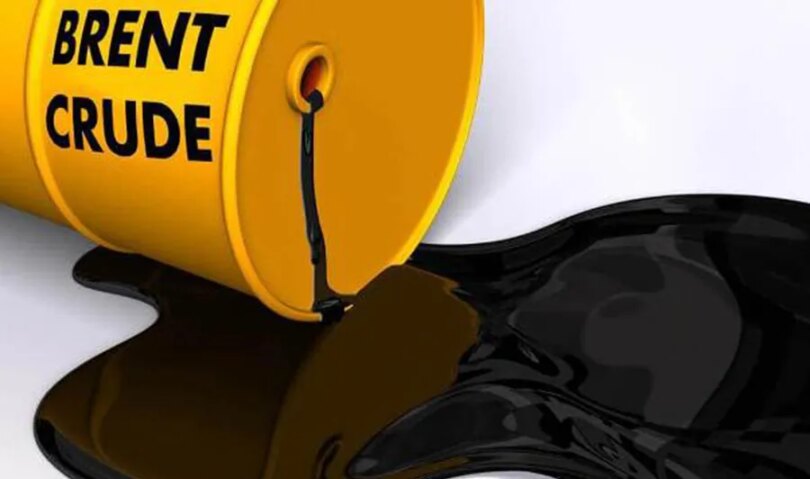
Oil prices rose on Thursday after American Vice President JD Vance warned Israel against further attacks on Iran-backed Hezbollah in Lebanon, raising doubts about the durability of the US-Iran ceasefire agreement.
Brent crude futures settled at $79.85 a barrel after chalking up 30 cents or 0.38 per cent, while the US West Texas Intermediate (WTI) crude futures gained 19 cents or 0.25 per cent to finish at $76.60 a barrel.
US Vice President JD Vance on Thursday issued an extraordinary rebuke to Israeli critics of the Iran deal, warning them not to alienate their “only powerful ally” left in the world.
The deal gives negotiators 60 days to reach an agreement on the status of Iran’s nuclear programme and set up a $300 billion reconstruction fund for Iran and other financial incentives.
Mr Vance told members of Israeli Prime Minister Benjamin Netanyahu’s cabinet to “wake up and smell the reality,” amid growing tensions between Netanyahu and US President Donald Trump.
Market analysts noted that the statements about Israel may have put things back on edge, as the two countries jointly launched the war on Iran on February 28.
Ultimately, oil markets will be focused on what happens in the Strait of Hormuz, through which 20 per cent of the world’s oil flowed before the start of the war.
Analysts expect a gradual recovery in flows through the Strait of Hormuz, while industry experts have cautioned that prices may not plummet as demand recovers and inventories are refilled.
Investment bank Goldman Sachs expects Gulf exports to normalise to pre-war levels by the end of July, with crude production recovering by October. The bank estimates that a normalisation in exports to pre-war levels might be achieved with a 13 million barrel-per-day increase in Hormuz flows from current levels to around 70 per cent of pre-war levels.
Markets will be watching closely in the coming week to see exactly how much oil begins to flow, especially Iranian oil, which will no longer be sanctioned thanks to the latest ceasefire agreement.
China, the world’s second-largest oil consumer, is forecast to consume 753 million metric tons of petrol in 2026, down 4.9 per cent from 2025 amid a pivot to new energy and high oil prices.