
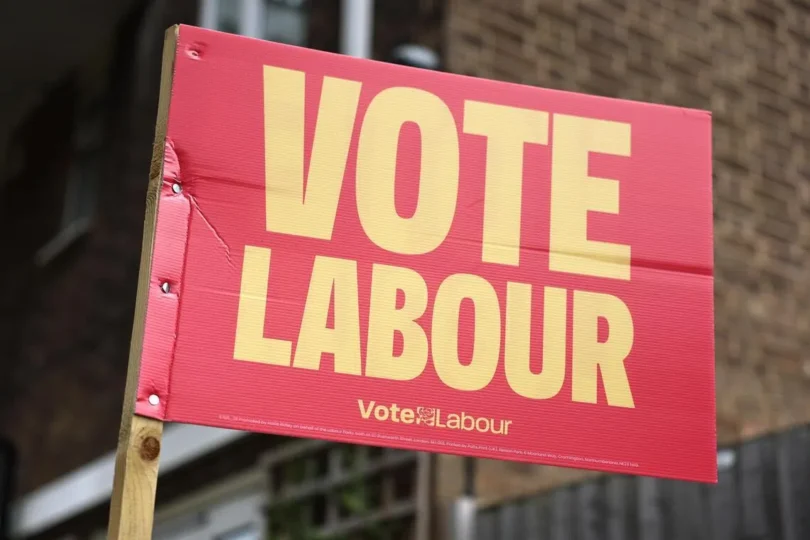
LONDON – British voters head to the polls on May 7 for local elections set to pile more misery on unpopular Labour Prime Minister Keir Starmer and cement the rise of right- and left-wing populists.
Millions of people are eligible to cast ballots across Scotland, England and Wales, in Mr Starmer’s biggest ballot-box test since winning the July 2024 general election by a landslide.
Surveys predict dire results for Labour, which is likely to accelerate talk of a possible leadership challenge against Mr Starmer, although removing the prime minister would be difficult and no obvious successor exists.
The hard-right Reform UK party, led by anti-immigrant firebrand Nigel Farage, and the left-wing Greens are expected to make huge gains as voters turn away from Britain’s establishment parties.
“It’s partly to do with the government making some unpopular decisions early on in its term and its leader, a hopeless communicator, failing to convey a sufficient sense of change,” said political scientist Tim Bale.
“And it’s partly to do with an electorate that simply has less patience and less party loyalty than ever,” the professor of politics at Queen Mary University of London told AFP.
Surveys suggest Labour will lose control of the devolved Welsh government in Cardiff for the first time since the country of three million people got its own parliament 27 years ago.
A YouGov poll published earlier in May showed Reform neck-and-neck with Plaid Cymru, a progressive alternative to Labour that wants Wales to be independent.
The study predicted a 23-point fall in Labour’s vote share from the 2021 Welsh election, “ending a century of dominance” across all elections for the party in Wales.
Losing power in Wales would be “disastrous” for Mr Starmer’s party, according to Professor Laura McAllister, a politics professor at Cardiff University.
“I think it will take quite some renewal for Labour to get over that,” she told AFP.
Britain’s ruling party is also fearful of a humiliating result in Scotland, where voters will elect members of the 129-seat devolved Scottish parliament.
When Mr Starmer entered Downing Street on a wave of enthusiasm in 2024, Labour was confident it could regain power north of the border for the first time since 2007.
But surveys now widely predict the pro-independence Scottish National Party (SNP) will extend, and likely strengthen, its 19-year grip on the administration in Edinburgh.
YouGov reckons the SNP could even win a rare majority, with Reform pipping Labour – whose Scottish leader Anas Sarwar recently demanded Mr Starmer’s resignation – into second place.
In England, pollster Robert Hayward has predicted Labour could lose about 1,850 of the roughly 2,550 local authority seats it is defending.
Some 5,000 council seats are up for grabs across the country.
Mr Hayward has tipped Reform to gain some 1,550 seats from Labour and Ms Kemi Badenoch’s right-wing Conservatives, mostly in white, working-class areas.
The Greens, led by self-styled “eco-populist” Zack Polanski and promoting a pro-Gaza message, are expected to gain hundreds of councillors at Labour’s expense, particularly in London.
Mr Starmer, 63, has swerved from one policy misstep to another since ending 14 years of consecutive Tory rule, and is currently engulfed in a scandal over sacked US envoy Peter Mandelson.
He has failed to spur economic growth as British citizens continue to feel the effects of a years-long cost-of-living pinch, but has been praised for resisting US President Donald Trump over Iran.
The Green party and Reform “are proposing eye-catching, even if some would say simplistic, solutions to problems that Labour and the Conservatives have struggled to resolve”, said Professor Bale.
The British press is awash with rumours that former deputy prime minister Angela Rayner or Health Secretary Wes Streeting could try to oust Mr Starmer after the results.
But neither is universally popular within Labour and would need to be nominated by a high threshold of 20 per cent of the party’s MPs to trigger a contest.
“I’m betting he will stumble on as the current least-worst option but it’s not a pretty sight,” Professor Steven Fielding, a Labour expert at Nottingham University, told AFP. AFP