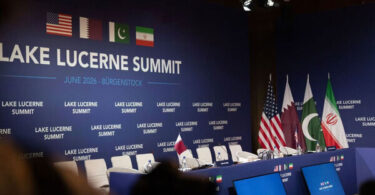
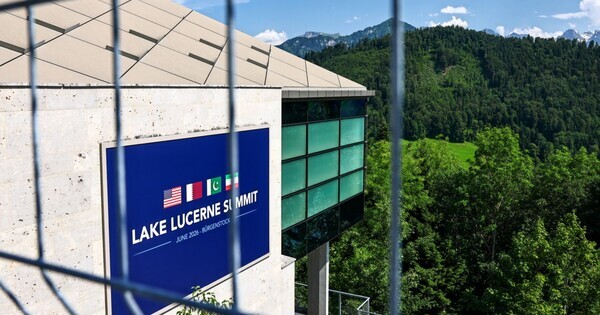
Burgenstock [Switzerland], June 22 (ANI): The first session of high-level talks between Iran and the United States under the framework of the 14-point Memorandum of Understanding (MoU) concluded on Sunday (local time) at the Lake Lucerne Summit in Switzerland’s Burgenstock, with mediators Qatar and Pakistan announcing ‘encouraging progress’ and a roadmap aimed at securing a final agreement within 60 days.
The joint statement posted by Qatar and Pakistan’s Ministry of Foreign Affairs on Monday informed that the summit was conducted in a ‘positive and constructive atmosphere’, resulting in the creation of a mechanism for technical negotiations.
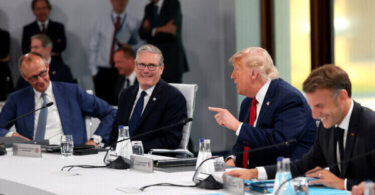
According to the statement, the US and Iran agreed to establish a High-Level Committee that will provide political oversight of the mediation process. Chief negotiators–JD Vance for the United States and Mohammad Bagher Ghalibaf for Iran–will regularly report to the committee while leading working groups focused on nuclear issues, sanctions, and a monitoring and dispute resolution mechanism to support implementation of the MoU.
‘The High Level Committee has agreed upon a roadmap towards reaching a final deal within 60 days, laying the foundation for the immediate commencement of further technical talks,’ the statement said.
The parties also agreed to establish a direct communication line during the negotiation period. The statement said, ‘In addition, a communication line between the parties has been formed for the period mentioned in paragraph 5 of the MoU to avoid incidents and miscommunication with the aim of safe passage for commercial vessels through the Strait of Hormuz.’
Additionally, a de-confliction cell involving the parties and Lebanon, facilitated by the mediators, will be created to ensure compliance with the termination of military operations in Lebanon under the MoU.
The statement said that technical discussions are set to continue throughout the week at the Burgenstock resort, covering all outstanding issues.
The statement added that Qatar and Pakistan ‘will continue to do their utmost to ensure that the negotiations continue to be conducted in a constructive atmosphere with the aim of reaching a final deal’.
The mediators also expressed appreciation to both Washington and Tehran ‘for their ongoing commitment to diplomacy and a peaceful resolution to the conflict,’ while thanking friendly nations for their support.
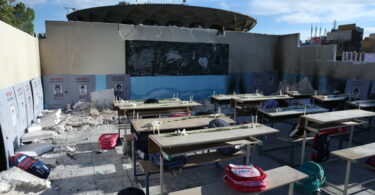
Meanwhile, Iranian Foreign Ministry spokesperson Esmail Baghaei on Sunday (local time) said that US President Donald Trump’s threats against the Islamic Republic during ongoing technical talks as part of the 14-point MoU led to the suspension of the quadrilateral meeting between the US, Iran, Qatar and Pakistan in Switzerland, even as discussions continued on Iranian oil sales, frozen asset releases and mechanisms related to maritime security in the Strait of Hormuz.
According to Iranian state media Islamic Republic of Iran Broadcasting (IRIB), Baghaei said that while technical-level discussions progressed, Iran decided not to continue the quadrilateral format following Trump’s warning to Tehran of hitting it ‘very hard’ if the Islamic Republic ‘immediately stop their highly paid proxies in Lebanon’.
Iranian Parliament Speaker MB Ghalibaf described the remarks as a sign of American ‘desperation’ while sharply criticising the US president, dismissing the comments as ineffective.
Following Trump’s remarks, Ghalibaf, who is also the chief negotiator for the Iranian side, in a post on X said that Iran would not be intimidated by such threats from Washington and asserted that the country’s armed forces were prepared to respond if necessary.
His remarks came in response to a statement by Trump, who warned Iran against supporting its ‘proxy groups’ in the region, particularly in Lebanon, in a veiled reference to Hezbollah.
In a post on Truth Social, Trump said, ‘Iran must immediately stop their highly paid PROXIES in Lebanon from causing trouble. If they don’t, we’ll hit Iran very hard again, just like we did last week, only harder!!!’ (ANI)