The Senate has defended the controversial provision in the Federal Road Safety Corps (Amendment) Bill, 2026, which prescribes penalties for preaching, hawking and trading inside commercial vehicles, insisting the offence has existed in Nigerian law since 2007.
The clarification follows public criticism over the bill, which proposes a ₦50,000 fine for anyone convicted of preaching, hawking or trading in commercial vehicles.
In a statement issued on Monday, Senate Leader Opeyemi Bamidele said the provision had been widely misunderstood, stressing that the amendment does not introduce a new offence or ban public preaching.
According to him, the prohibition is already contained in Section 10(4) of the Federal Road Safety Commission (Establishment) Act, 2007, and Regulation 220 of the National Road Traffic Regulations, 2012.
Bamidele explained that the offence previously appeared as Item 36 in the Second Schedule of the Act and has only been renumbered as Item 49 under the proposed amendment.
He said the objective of the legislation is to improve road safety by preventing distractions that could endanger passengers and other road users.
“The bill does not outlaw preaching on the streets as some interests have claimed. It is about the safety of commuters and other road users and not intended to undermine any religious activity in the public space,” he said.
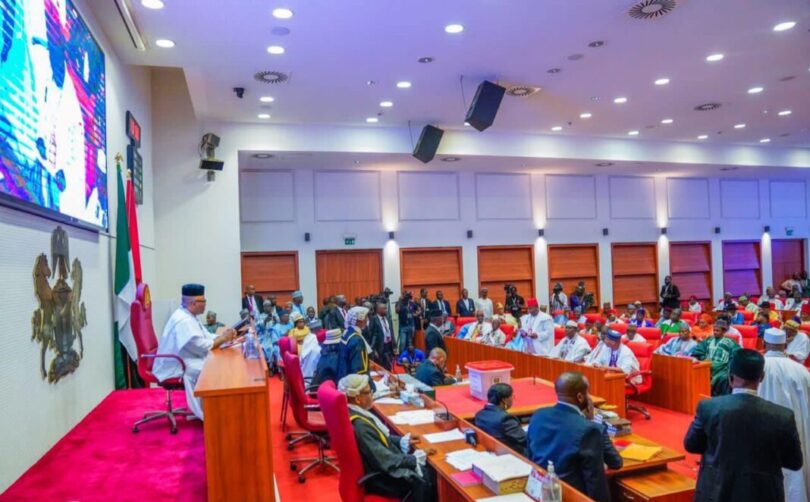
The Senate Leader also dismissed reports suggesting he sponsored the bill, explaining that it originated in the House of Representatives and was transmitted to the Senate for concurrence in line with constitutional requirements.
He added that the amendment process is still ongoing and encouraged stakeholders with concerns to engage the appropriate legislative channels before the bill is finalised.
The amendment bill seeks to strengthen the FRSC’s enforcement powers through stiffer penalties for traffic-related offences.
In addition to the ₦50,000 fine for preaching, hawking or trading inside commercial vehicles, the bill proposes a ₦50,000 fine, six months’ imprisonment, or both for motorists who refuse roadside breath tests conducted by FRSC officials on reasonable suspicion.
It also increases the penalty for driving under the influence of alcohol or intoxicating drugs from ₦5,000 to ₦100,000, with offenders facing up to two years’ imprisonment or both.
Motorists who disobey traffic lights, road signs and other traffic control devices would also face fines of up to ₦100,000, while penalties for speeding and reckless driving have similarly been increased.
The revised schedule contains 52 traffic offences and corresponding penalties aimed at improving compliance with traffic laws and enhancing road safety across the country.
The bill has, however, continued to attract criticism from opposition parties, civil society organisations and members of the public, who argue that imposing tougher penalties for hawking and preaching in commercial vehicles is insensitive at a time of rising unemployment, inflation and economic hardship.