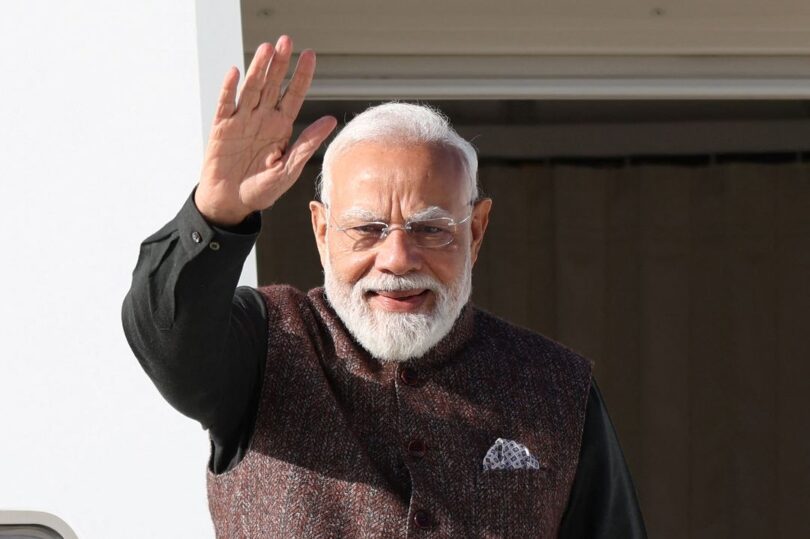
India’s Prime Minister Narendra Modi lands in New Zealand on Friday touting a free trade deal that has sparked a backlash despite promises it will unlock jobs and economic riches.
On the agenda are trade, tourism and sport — but recent undercurrents of anti-migrant sentiment risk tarnishing his trip to a nation long proud of its tolerance.
New Zealand Prime Minister Christopher Luxon celebrated the signing in April of the free trade deal with the world’s most populous nation, touting an export boom that would deliver jobs and investment in spades.
The pact is widely expected to be approved by New Zealand’s parliament.
But not everyone is happy at the prospect.
Lawmakers in the populist New Zealand First Party, part of Luxon’s governing coalition, railed against parts of the agreement covering migration and visas.
“I don’t care how much criticism we get, I am just never going to agree with a butter chicken tsunami coming to New Zealand,” government minister Shane Jones told a local radio show.
An Indian community leader accused Jones of “outright racism”.
A prominent evangelical preacher went even further when he heard Indian leader Modi would soon be arriving on New Zealand’s shores.
Self-proclaimed “apostle” Brian Tamaki accused Modi of vilifying Christians in India — and suggested New Zealanders should retaliate in kind.
His comments were condemned by New Zealand’s race relations commissioner as “utterly appalling”.
Right-wing Hindu nationalist groups affiliated with Modi’s BJP party have targeted religious minorities in India, particularly Muslims, but also Christians. Violence against minorities has surged under the party’s rule.