
A US-based expert tracking Hindu hate crimes targeting Muslims, Christians, and marginalised castes has testified before a US government commission, presenting a record of human rights abuses against minorities in India and called for targeted Global Magnitsky sanctions against leaders of the ruling party.
In his testimony before the US Commission on International Religious Freedom (USCIRF) on the situation of Muslims and Christians in India, Raqib Hameed Naik highlighted senior political leaders’ role in enabling hate and violence, private construction firms’ complicity in demolishing minority properties, social media platforms’ amplification of hate speech, and the growing transnational repression targeting critics abroad.
The persecution “bears the sanction of the country’s top political leadership led by Prime Minister Modi” and is carried out through the state apparatus and the militant networks of the Hindu nationalist movement (the Sangh Parivar / RSS ecosystem, including the Bajrang Dal and Vishwa Hindu Parishad), Naik, who currently serves as the Executive Director of the Center for the Study of Organized Hate (CSOH), told USCRIF.
He described this systematic repression as “embedded in bureaucracy, codified in law, shielded by absolute impunity, and steadily more ruthless in execution,” naming specific leaders, including Prime Minister Narendra Modi and figures from the ruling Bharatiya Janata Party (BJP) such as Yogi Adityanath and Himanta Biswa Sarma, as enablers of this persecution.
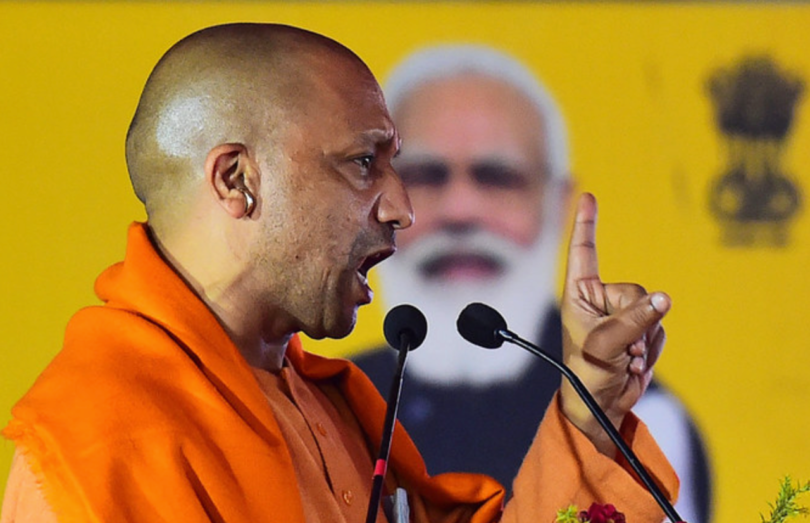
The chief minister of northern Uttar Pradesh state, Adityanath, is a hard-line Hindu militant monk, notorious for his anti-Muslim incendiary rhetoric.
He supports the ‘Love Jihad’ campaign, alleging unverified conversion plots. His followers have used extremist rhetoric, calling for digging up Muslim women from their graves and raping them, and he has suggested installing Hindu idols in mosques.
In his recent election campaign in the West Bengal state, where his BJP defeated a regional party, Adityanath told his supporters: “Bengal is the land of Maa Kali (Hindu deity Kali), and it should not be allowed to become the land of Kaaba.”
Kaaba is Islam’s holiest site in Mecca and critics called this a direct attack on Muslim religious identity and an attempt to stoke fears of “Islamisation” to score a win in election.
And Sarma — the BJP chief minister of Assam since 2021 and re-elected in 2026 for a third term — is one of India’s most polarising politicians.
Fiercely criticised by opposition parties, minorities, and civil rights groups, Sarma has repeatedly targeted Muslims of Assam state in hate speeches and policies.
He often speaks of “troubling” Muslims, boasts of deleting nearly half a million Muslim voters during electoral roll revisions, and demands that Muslims adopt family planning to reduce birth rates.
His government has carried out large-scale expulsions of Muslims and demolitions of their homes. Earlier this year, his party shared an AI-generated video showing him symbolically “shooting” at Muslim figures.
Rights groups, including Amnesty International and Human Rights Watch, say abuse of minorities has risen in India since Modi took office in 2014, pointing to a religion-based citizenship law the UN calls “fundamentally discriminatory,” anti-conversion legislation that challenges freedom of belief, the 2019 removal of Muslim-majority Kashmir’s special status, and the demolition of Muslim-owned properties.
Related
Risk of intrastate mass killings
“India today stands fourth out of 168 countries assessed by the US Holocaust Memorial Museum’s Early Warning Project for the risk of intrastate mass killings” Naik told the USCIRF in his testimony.
“State-led violence and dispossession against Muslims have reached an unprecedented scale. The clearest example is India’s northeastern Assam state, where between 2021 and 2026 the BJP state government conducted at least 33 documented forced eviction operations, demolishing over 22,000 homes and other structures and displacing 20,387 families with nearly 100,000 people, mostly Bengali-origin Muslims, a community estimated at over 10 million in Assam and around 36 million nationwide. 40 percent of those displaced lost their homes to demolitions in 2025 alone.”
Should this institutionalised dispossession continue, it risks creating one of the country’s largest populations of internally displaced persons, Naik told the commission.
He cited a 2025 report documenting 1,318 in-person hate speech incidents against Muslims and Christians across 21 Indian states, representing a 97 percent rise since 2023.
“That is a shocking four hate speeches per day, and a 97 per cent increase over 2023,” he said.
He also provided evidence of dehumanising language used in public events, where minorities were referred to as “termites,” “pests,” “snakes,” or “pigs”, and documented instances of sword and knife distributions and firearm training for Hindu militant recruits.
Naik testified that “Special Intensive Revision” (SIR) of electoral rolls is being used alongside the Citizenship Amendment Act (CAA) and the National Register of Citizens (NRC) to disenfranchise millions of Muslim voters, specifically citing 9 million excluded voters in West Bengal state.
He highlighted that half of the states in the world’s largest democracy have passed anti-conversion laws that he claims are weaponised to incarcerate minority Christians and Muslims.
The rights defender presented evidence of punitive demolitions of Muslim-owned properties, noting that these continue despite a 2024 Supreme Court order.