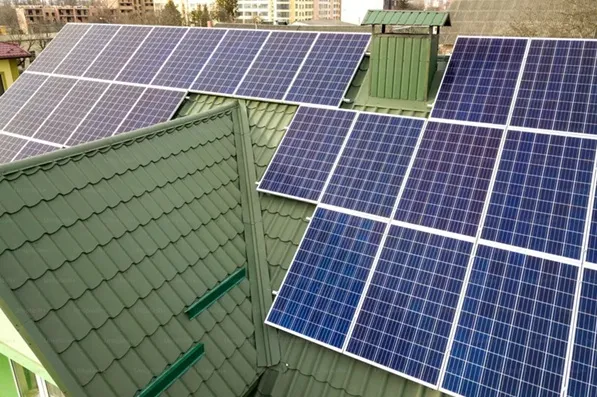
The Federal Government has now moved to change how those panels get into the country, and the implications are landing on an energy market that has quietly built its entire informal infrastructure around imported solar hardware.
According to a detailed breakdown published by TechCartel, one of Nigeria’s most closely watched tech publications for consumer technology, the government is not staging an overnight ban. What it is staging is a structured financial squeeze: higher import taxes on finished solar panels, lower duties on raw materials for local manufacturers, and a 2036 target for 100 percent local production.
The policy timeline started earlier than most people noticed. In March 2025, the Minister of State for Technology, Uche Nnaji, announced a Solar Import Phase-out Roadmap. The stated motivation was the import bill, which crossed ₦200 billion in a single year. By January 2026, the Rural Electrification Agency reported that local manufacturing capacity had grown from 120 MW to 300 MW. On April 1, 2026, the Minister of Finance signed the 2026 Fiscal Policy Measures, formally introducing Import Adjustment Taxes on finished solar goods. A Green Tax Surcharge follows on July 1, 2026.
For anyone who opened an import Form M before April 1, there is a 90-day window to clear goods at the old rate. After that, the new cost structure kicks in. The Secure Energy Project estimates a 15 to 25 percent rise in solar panel prices by late 2026.
To understand why this policy lands differently in Nigeria than it would elsewhere, you have to understand what the grid has done to Nigerian electricity habits. Years of erratic supply, multi-hour daily outages, and voltage fluctuations that destroy electronics did not produce a population waiting patiently for the government to fix things. It produced a population that fixed things itself.
First came generators, petrol then diesel then gas. Then came inverters with lead-acid batteries, then lithium batteries, and then solar panels added on top to charge them without spending on fuel. The 1 kWh solar generator, once considered a niche product, is now a completely ordinary fixture in small households and one-room businesses. Some call them power stations, and that name has started to feel accurate. Provisions shops, phone repair kiosks, tailoring studios, and barbing salons run on them every single day. They are small enough to sit on a balcony, affordable enough for a two-month savings plan, and powerful enough to run lights, DC fans, and a phone charger without touching a NEPA bill.
The scale goes well beyond individual homes. Petrol stations that once ran generators round the clock have converted their canopy roofs into solar arrays, running hybrid systems where solar handles daytime load and the generator only kicks in at night. Pharmacies, internet cafés, printing shops, and cold rooms powering perishables now run on solar. The solar transition in Nigeria has been market-driven and it has moved fast.
That context is what makes the arithmetic in TechCartel’s breakdown so pointed. Nigeria’s local solar manufacturing capacity stands at 300 MW as of April 2026. The country’s estimated demand for energy stability is 3.7 GW. The gap is over 3,400 MW. Local manufacturers currently price their panels about 16 percent above imported alternatives. As import taxes rise, that gap will narrow, but the timeline is vital. If local capacity grows faster than analysts expect, the transition could be orderly.
The government’s $425 million commitment to eight new manufacturing plants, and the 150 percent capacity growth achieved in a single year, suggest the industrial ambition is real. Nigerian-assembled panels are already being exported to Ghana and Burkina Faso, which signals a manufacturing base serious enough to serve regional demand. The 2036 target is a decade away, but the trajectory is being built now.
For Nigerians planning a solar installation in the coming months, the window is clear. The Form M grace period runs 90 days from April 1. The Green Tax Surcharge begins July 1. Any installation completed before that first wave of cost increases arrives will avoid the opening price shock. After that, the cost of running your own power in Nigeria, already a choice made out of necessity, gets a little harder to justify on a budget.