More than 40 years after the bombing of Air India Flight 182, Canada’s main intelligence agency has publicly blamed Canada-based Khalistani extremists for the attack for the first time. India has maintained since 1985 that the bombing was carried out by Khalistani terrorists. However, Canadian authorities had largely avoided directly naming the movement in official statements and memorials until now.
CSIS Names Khalistani Extremists
In a Facebook post marking the anniversary of the tragedy, the Canadian Security Intelligence Service (CSIS) stated that a bomb planted by Canada-based Khalistani extremists destroyed Air India Flight 182 on June 23, 1985. The agency said the attack killed all 329 people on board, most of whom were Canadian citizens, and remains the deadliest terrorist attack in Canada’s history.
The Air India Flight 182 Tragedy
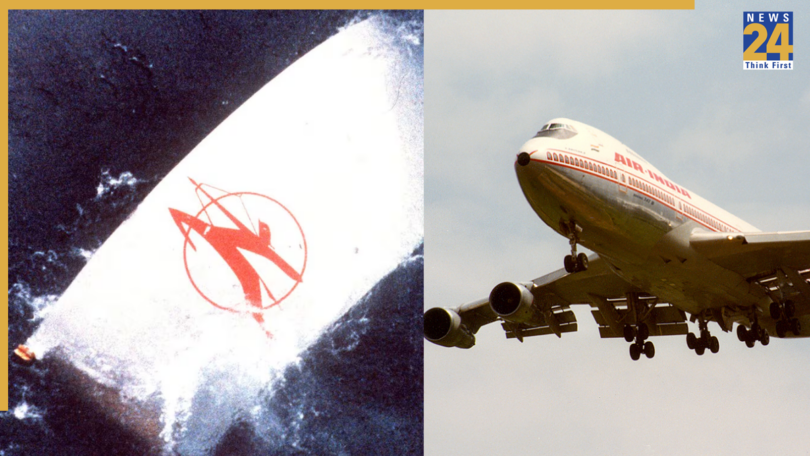
Air India Flight 182, a Boeing 747 named Emperor Kanishka, was flying from Toronto to Mumbai when a bomb exploded in its luggage compartment over the Atlantic Ocean. The aircraft broke apart mid-air, killing all passengers and crew members.
Investigators later linked the bombing to members of the banned Khalistani terrorist group Babbar Khalsa.
The attack remained the world’s deadliest act of aviation terrorism until the September 11 attacks in the United States in 2001.In 2005, Canada officially declared June 23 as the National Day of Remembrance for Victims of Terrorism.
CSIS Warns About Khalistani Extremist Networks
The latest statement comes months after CSIS identified Canada-based Khalistani extremist groups as a national security threat in its annual report.
According to the agency, some extremist groups continue to use Canadian soil to promote violent agendas, raise funds and support extremist activities.
The report also claimed that certain individuals were using Canadian institutions and community networks to advance extremist causes.
Why Did It Take Canada So Long?
Many have questioned why it took more than four decades for Canada to clearly identify Khalistani extremists as being responsible for the attack.
A major reason was the failure of Canada’s security and intelligence agencies.
A 2010 public inquiry led by former Supreme Court Justice John Major found that a series of mistakes severely damaged the investigation.
Intelligence Failures Hurt the Probe
The inquiry revealed serious coordination problems between CSIS and the Royal Canadian Mounted Police (RCMP). CSIS had been monitoring Babbar Khalsa leader Talwinder Singh Parmar before the bombing. However, the agency later destroyed hundreds of hours of wiretap recordings that could have been crucial evidence. The inquiry concluded that these failures made it much harder to secure convictions.
Lack of Urgency After the Attack
Despite the fact that most victims were Canadian citizens, the bombing was often viewed as an “Indian issue” rather than a Canadian tragedy. The public inquiry found that this attitude contributed to a lack of urgency in the investigation.
Former Canadian Prime Minister Stephen Harper later acknowledged that the victims’ families faced institutional indifference.
Witness Intimidation and Legal Challenges
The investigation also faced legal obstacles for years. Several key witnesses were reportedly intimidated, while some were murdered before they could testify.
In 2005, a major criminal trial ended with the acquittal of the main accused because of insufficient evidence. Public pressure following the verdict eventually led to a full public inquiry.
Official Language Remained Cautious for Years
Although Prime Minister Harper apologised in 2010 for Canada’s failures in handling the case, official documents continued to use vague terms such as “extremists” and “insurgents.” Canada avoided directly naming Khalistani groups in connection with the bombing for many years.
The latest CSIS statement marks the first time the agency has explicitly referred to “Canada-based Khalistani extremists” as responsible for the attack.
Why This Matters for India
India has long accused Canada of allowing Khalistani extremists to operate freely within its borders.
For decades, Indian governments have argued that some individuals linked to the Khalistan movement used Canada as a base for fundraising, propaganda and support activities.
Canadian governments, however, often defended these groups under freedom of expression laws and were reluctant to take strong action. This became a major source of tension between the two countries.
Growing Diplomatic Tensions
Relations between India and Canada became increasingly strained under former Prime Minister Justin Trudeau. One major controversy occurred during Trudeau’s 2018 visit to India when Jaspal Atwal, a Sikh Canadian convicted in an attempted assassination case, was invited to an official event.
Tensions escalated further after Trudeau accused Indian agents of being involved in the killing of Khalistani activist Hardeep Singh Nijjar in Canada. The allegations led to a major diplomatic dispute between the two countries.
A Shift in Canada’s Position
Recent developments suggest Canada may be taking a tougher stance on Khalistani extremism. In its 2025 annual report, CSIS for the first time identified Canada-based Khalistani extremist groups as a security threat.
The agency warned that some groups continue to engage in extremist activities and raise funds for violent causes. Now, by officially acknowledging the role of Khalistani extremists in the Air India Flight 182 bombing, Canada appears to be moving closer to the position that India has maintained for decades.
Many observers see the statement as a significant moment in the long-running debate over Khalistani extremism and Canada’s approach to the issue.
First published on: Jun 25, 2026 07:13 PM IST
Get Breaking News First and Latest Updates from India and around the world on News24. Follow News24 on Facebook, Twitter.
End of Article
Related Story