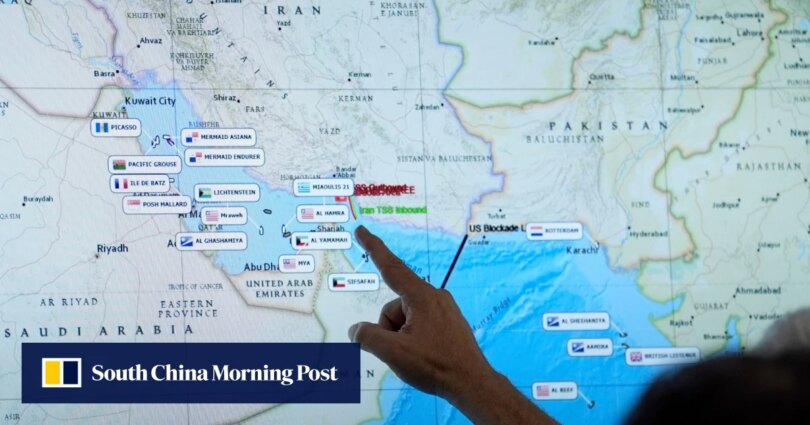
China is stepping up efforts to secure critical sea lanes and protect its overseas assets, as crises at maritime chokepoints – including the Strait of Hormuz – expose growing vulnerabilities in global trade.
In response, Beijing has tasked leading industrial enterprises and academic institutions with spearheading research to safeguard strategic trade corridors and overseas port holdings, amid escalating geopolitical tensions linked to the US-Israeli war in Iran and legal disputes over Panama Canal assets.
The urgency of such efforts has intensified since the outbreak of the Iran war in late February, which has effectively shut down the strait – a vital artery that handles about 20 per cent of global oil and gas flows.
Against this backdrop, the State-owned Assets Supervision and Administration Commission (Sasac) on Monday unveiled its annual research agenda. Of the 30 projects announced, four focus on energy security and geopolitical conflict, underscoring Beijing’s resolve to develop contingency plans for an increasingly unstable global order.
In the maritime and energy sectors, shipping giant Cosco will work with Shanghai Jiao Tong University to analyse the effects of international maritime chokepoints on China’s supply chains. The PetroChina Planning and Engineering Institute, together with Tsinghua University, will also lead a study on the role of state-owned enterprises in safeguarding national energy security amid a shifting global landscape.
The Iran war has heightened pressure on Asian economies that depend on safe passage through the Strait of Hormuz, with Japan planning to release a second round of oil reserves from its stockpiles in early May. China’s substantial strategic reserves and diversified energy mix have helped it weather the shock, but the outlook remains uncertain as the conflict enters its third month.
🚨BREAKING: Watch the full clip here ➤