Advertisement
Advertisement
Commercial-scale trapping and trading of wild waterbirds is threatening the ecological balance of the Hadejia-Nguru Wetlands, one of West Africa’s most important habitats for resident and migratory birds.
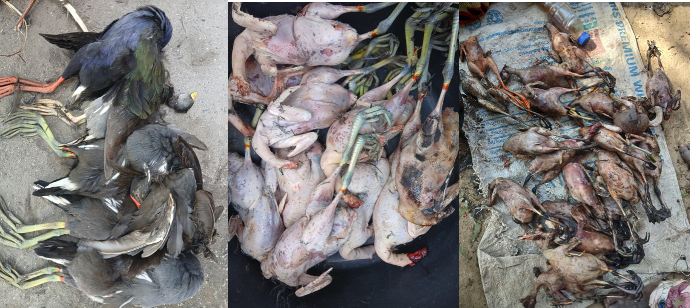
Recent field documentation by conservation organisation, Wild Hausa, revealed what it described as the daily mass harvesting and commercial trading of waterbirds in Gatafa community, Hadejia Local Government Area of Jigawa State.
The Hadejia-Nguru Wetlands are internationally recognised for their ecological importance, serving as feeding, staging and wintering grounds for millions of resident waterbirds and Palearctic migrants travelling along the flyway from Europe.
However, conservationists have raised concerns that intensified trapping of birds, particularly rails, gallinules and other associated wetland species, could accelerate biodiversity loss and undermine the ecological functions of the wetlands.
Photographs documented by Wild Hausa showed large quantities of trapped and processed birds allegedly being harvested daily for commercial purposes in Gatafa.
According to the conservation organisation, the scale of the harvesting has gone beyond subsistence use and now poses a serious threat to the sustainability of the bird population and the wider wetland ecosystem.
While the harvesting of wild birds provides short-term income for some rural households, Wild Hausa warned that continued extraction at the current scale could exceed the natural replenishment capacity of the affected species.
It said the removal of large numbers of birds could also disrupt important ecological processes within the wetlands, including seed dispersal, pest control, foraging and nutrient cycling.
The organisation said indiscriminate trapping was particularly concerning because the methods used could capture breeding adults, migratory birds and non-target species, potentially contributing to population declines across the region.
“Various species of waterbirds are being harvested on a daily basis, unsustainably, at Gatafa, Hadejia, Jigawa State,” the organisation said.
The conservation group warned that the consequences could extend beyond biodiversity loss, arguing that excessive exploitation could eventually deprive vulnerable households of a resource on which they have traditionally depended.
According to Wild Hausa, the Hadejia-Nguru Wetlands are not only important for wildlife conservation but also support the livelihoods of communities through fishing, farming, livestock production and other wetland-based economic activities.
It therefore warned that the depletion of wild waterbirds could have long-term implications for communities if the ecological integrity of the wetlands continues to deteriorate.
The organisation also raised concerns about enforcement of wildlife protection measures in the state, saying the ongoing commercial harvest undermined efforts by the Jigawa State Government to update and enforce its wildlife conservation laws.
It argued that Nigeria and its component states have legal obligations to protect native wildlife and conserve ecologically important habitats.
As a Ramsar-designated wetland, the Hadejia-Nguru ecosystem is also subject to international conservation commitments, including the Ramsar Convention on Wetlands, which promotes the conservation and “wise use” of wetlands.
Wild Hausa further pointed to Nigeria’s obligations under the Convention on Migratory Species, which seeks to promote the protection of migratory animals crossing international boundaries, as well as the Convention on Biological Diversity, which requires parties to conserve biodiversity and promote sustainable use of biological resources.
The organisation said the situation required an urgent response that combines enforcement with measures to address the economic realities confronting communities involved in bird trapping.
In a formal appeal to the Jigawa State Ministry of Environment, the Executive Director of Wild Hausa, Dr Abubakar Surajo Ringim, proposed a community-based intervention aimed at reducing pressure on the wetland’s wildlife.
Ringim called for active bird trappers to be integrated into conservation efforts by transforming them into recognised eco-guards and wildlife monitors.
According to him, people with knowledge of the wetlands and bird habitats could become valuable partners in monitoring wildlife and reporting illegal or unsustainable harvesting if they are properly trained and supported.
He also advocated awareness campaigns conducted in local languages, with town-hall meetings involving bird harvesters, young people, community leaders and elders.
Such campaigns, he said, should focus on the ecological importance of waterbirds and the long-term consequences of unsustainable harvesting.
Wild Hausa also called for the introduction of closed breeding seasons and stronger enforcement measures, alongside alternative livelihood programmes that would reduce communities’ dependence on wild bird harvesting.
It proposed community-based poultry farming and aquaculture as possible alternatives that could provide income while reducing pressure on wild populations.
The conservation organisation stressed that enforcement alone would not be sufficient if communities dependent on the trade were not provided with viable economic alternatives.
It urged the Jigawa State Government and relevant conservation authorities to urgently investigate the scale of the trapping, identify the species being targeted, assess the impact on their populations and strengthen monitoring of the affected areas.
The organisation also called for closer collaboration between government agencies, local communities, conservation groups and traditional institutions to protect the wetlands.
It warned that without immediate intervention, the Hadejia-Nguru Wetlands risked evolving from a globally important refuge for migratory and resident birds into a depleted commercial wildlife harvesting zone.
“Balancing local communities’ livelihood needs with robust legal enforcement is urgent to ensure the Hadejia-Nguru Wetlands remain a protected sanctuary, not a depleted trade hub,” Mr Ringim said.