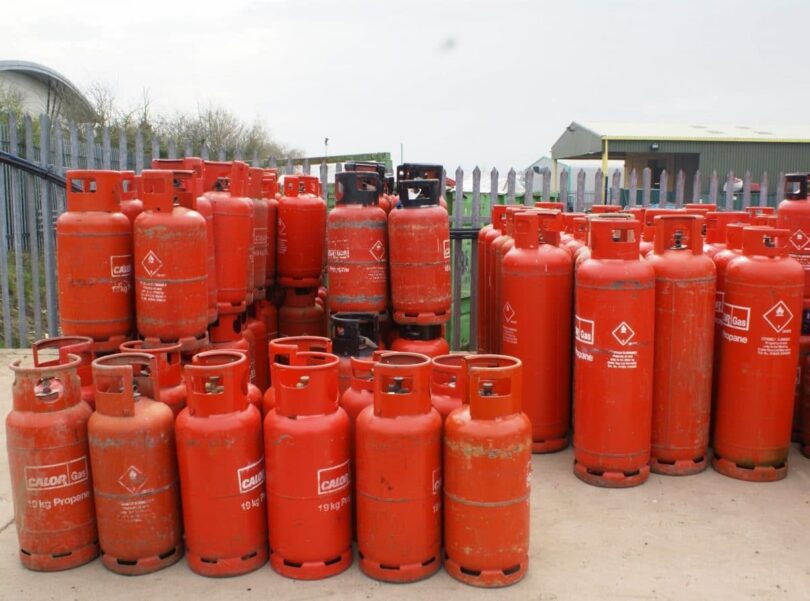
Cooking gas prices surged in March 2026, with the average cost of refilling a 5kg cylinder rising to N7,655.73, while a 12.5kg cylinder climbed to N19,652.83.
This is according to the National Bureau of Statistics’ (NBS) latest Liquefied Petroleum Gas (LPG) Price Watch.
The report shows households faced sharper energy costs during the month, with refill prices rising by double digits compared to February, adding further pressure to living costs.
The data highlights continued inflationary pressure in the domestic energy market, as cooking gas prices rise alongside broader increases in transport and food-related expenses.
NBS data shows the average price to refill a 5kg cylinder increased by 12.60% month-on-month from N6,799.18 in February to N7,655.73 in March 2026. On a year-on-year basis, the price rose 4.55% from N7,322.49 recorded in March 2025.
Zonal analysis showed the North-West recorded the highest average 5kg refill price at N8,137.81, followed by the North-East at N7,890.53, while the South-South posted the lowest average at N7,300.95.
For 12.5kg cylinders, the average refill price rose even faster, climbing 15.62% month-on-month from N16,997.94 in February to N19,652.83 in March. Compared with March 2025, prices increased by 6.48% from N18,456.24.
Regionally, the North-West recorded the highest average 12.5kg refill price at N20,701.66, while the South-East posted the lowest at N18,432.63.
March’s cooking gas data comes amid heightened global economic uncertainty driven by geopolitical tensions.
The sharp increase in LPG prices points to sustained pressure in Nigeria’s household energy market, driven by supply costs, exchange rate pass-through, logistics expenses and global LPG pricing dynamics.
Although cooking gas adoption has grown as households move away from kerosene and firewood, rising refill costs risk slowing that transition, especially among lower-income consumers already facing elevated food and transport costs.
Ade Adebulu, policy expert based in Abuja said “The higher LPG prices may worsen energy poverty as some households revert to dirtier fuels.”
The latest increase adds to concerns about inflationary pressures extending beyond food into essential household utilities.
Naijaonpoint earlier reported that Nigeria’s headline inflation rate increased to 15.38% in March 2026, up from 15.06% recorded in February.
In December 2025, the Central Bank of Nigeria (CBN) projected that headline inflation will moderate to an average of 12.94% in 2026, driven by easing food prices and a decline in the cost of premium motor spirit (PMS).
The projection is contained in the apex bank’s 2026 Macroeconomic Outlook for Nigeria.