
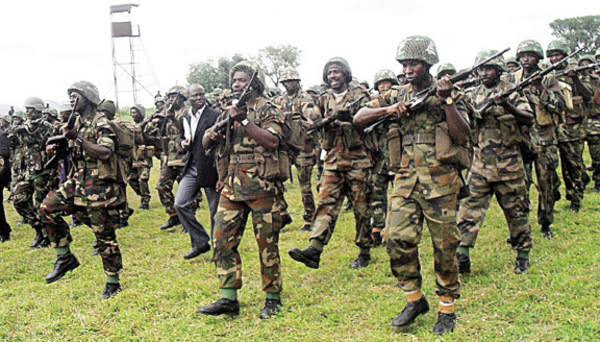

The Nigerian Army has successfully trained 14,000 of the 28,000 additional soldiers approved by President Bola Tinubu to boost manpower in the ongoing campaign against terrorism, banditry, and violent crime.
The Chief of Army Staff, Lieutenant-General Waidi Shaibu, disclosed the recruitment and training updates during an interactive session with media executives on the sidelines of the 2026 Nigerian Army Day Celebration in Port Harcourt, Rivers State. The army chief explained that the aggressive recruitment drive followed a comprehensive review of the force’s manpower limitations shortly after he assumed office.
The initial manpower review exposed a clear need to bolster frontline numbers to effectively confront emerging security challenges across multiple geopolitical zones. After presenting the findings to the presidency, approval was granted to recruit 28,000 new personnel to expand the defense fleet.
“Within one week of assuming command, I reviewed the manpower state of the Nigerian Army and saw the need to improve our strength because of the emerging security challenges across the country. I recommended to Mr. President the need to improve our manpower, and he graciously approved the recruitment of 28,000 personnel,” Shaibu said.
The first phase of this initiative has seen 6,000 soldiers graduate from the Zaria training depot, alongside 5,000 personnel from the Osogbo training school. An additional 3,000 recruits are scheduled to graduate from the Amasiri-Edda Training Depot, bringing the total number of newly trained combatants to 14,000.
To ensure these forces are prepared for the complexities of asymmetric warfare, the military command overhauled its standard training curriculum. Recruits now undergo nearly 11 months of intensive preparation prior to frontline deployment.
“Having manpower is one thing; ensuring they are properly trained is another. We have reviewed the curriculum to focus on marksmanship proficiency, counter-insurgency, counter-terrorism and critical field skills. Before deployment, these young soldiers undergo almost 11 months of intensive training to ensure they are combat-ready,” the COAS said.
The influx of trained personnel and modernized equipment has yielded immediate results on the battlefield. Intelligence-led operations, executed in close coordination with sister security agencies and international defense partners, have led to the neutralization and arrest of 1,877 terrorists.
Parallel to the human resource expansion, substantial investments have been made in technological assets and modern hardware. The military has integrated a significant number of mine-resistant ambush protected vehicles, advanced surveillance platforms, and unmanned aerial vehicles into active combat zones.
“UAVs are among the critical combat enablers in modern warfare. We have acquired and deployed them across the various geopolitical zones to support ongoing operations. Some have surveillance capabilities, while others have strike capabilities,” Shaibu said.