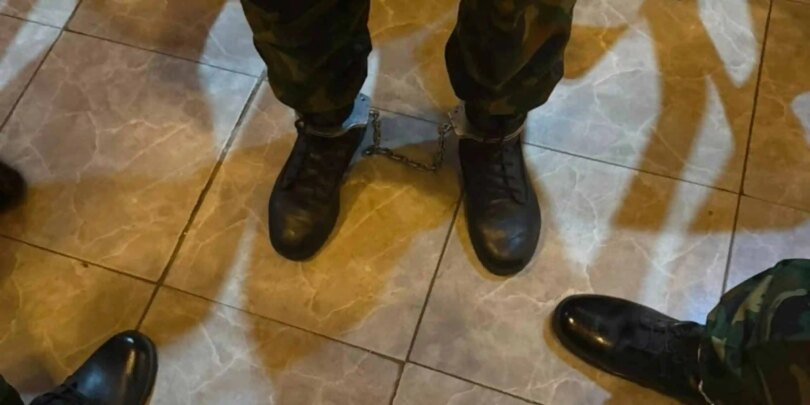
The Defence Intelligence Agency (DIA) has reportedly stopped lawyers and relatives from visiting military personnel detained over an alleged plot to overthrow President Bola Tinubu’s administration.
Naijaonpoint reports that the restriction was said to have been imposed shortly after some of the accused officers and witnesses alleged before a court that they were tortured and coerced into making confessional statements during interrogation.
Sources familiar with the case, who spoke with Sahara Reporters, said the allegations emerged during a trial-within-a-trial instituted to determine whether statements presented by the prosecution were made voluntarily and could be admitted as evidence.
At least 35 military personnel are reportedly facing trial over allegations that they conspired to remove the President from office.
During the proceedings, some of the detained officers reportedly accused their interrogators of subjecting them to torture and other forms of pressure.
They alleged that the treatment was carried out on the instructions of a senior military intelligence officer, Brigadier General Nicholas Ashinze.
According to sources, the detainees claimed they were made to memorise and repeat statements prepared by investigators instead of being allowed to freely give their own accounts.
A source familiar with the proceedings alleged, “They were tortured and compelled to repeat statements written for them by their interrogators.
“That testimony became part of the trial-within-a-trial.”
The claims have raised fresh concerns about how the investigation was conducted and the reliability of the statements the prosecution is reportedly seeking to tender before the court.
The allegations have not been independently verified, while the DIA and Ashinze had yet to publicly respond to the specific torture claims as of the time of the report.
Ashinze’s reported role in the investigation has also attracted scrutiny because of his previous involvement in a corruption case linked to funds allegedly released by the Office of the former National Security Adviser, Col. Sambo Dasuki (retd.).
In April 2017, the Economic and Financial Crimes Commission (EFCC) gave details of a case in which Ashinze and other defendants were accused of receiving about ₦5.6bn from the former NSA’s office.
An EFCC witness, Hassan Seidu, had testified before Justice Gabriel Kolawole of the Federal High Court in Abuja that the funds were received by the defendants.
Ashinze was subsequently prosecuted in connection with the arms procurement scandal involving the alleged diversion of money intended for the purchase of weapons to fight insurgency.
Citing the earlier case, sources questioned the decision to assign him a leading role in the investigation of fellow military officers accused of treason.
One source alleged, “His involvement has raised serious concerns about the credibility and impartiality of the investigation.
“Many believe the process is being driven by political considerations rather than objective evidence.”
Sources said lawyers and family members were prevented from visiting the detainees shortly after the allegations of torture were raised during court proceedings.
Another source said, “Immediately after the torture allegations became public in court, access to the detainees was stopped.
“Lawyers and relatives are no longer being allowed to visit.”
An insider alleged that the restriction was intended to prevent the detained officers from providing more information about their treatment in military custody.
“The belief among those close to the matter is that Ashinze and his team are trying to cover their tracks after the torture allegations surfaced in court,” the source claimed.
Sources within the intelligence agency, however, reportedly attributed the restriction to the discovery of mobile phones and batteries in the possession of some detainees.
They described the alleged discovery as a security breach that required the authorities to tighten access to the detention facility.