
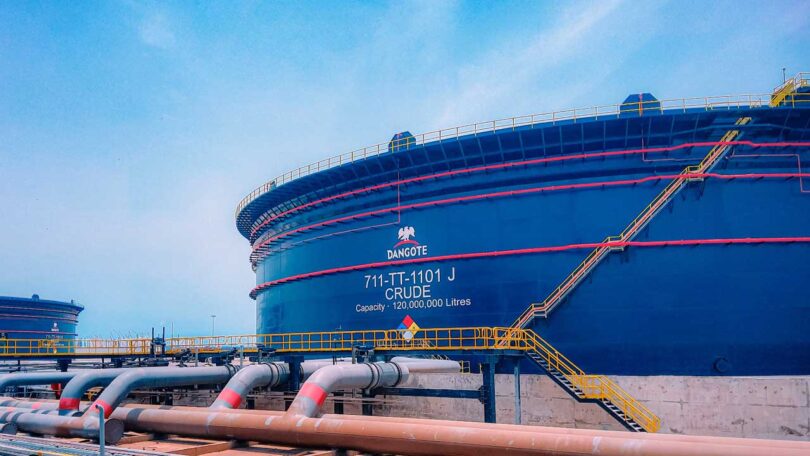

In a major commercial shift, the Dangote Petroleum Refinery has suspended its naira-based transaction model and officially transitioned to a dollar-denominated pricing framework for all refined products.
The new policy effectively ends the naira payments initially established under the Federal Government’s naira-for-crude agreement. Under the new structure, all previously issued naira-denominated Proforma Invoices and Deal Recaps for gantry and coastal transactions have been declared invalid.
The refinery’s Group Commercial Operations on Tuesday, July 14 released the new dollar benchmarks for wholesale fuel purchases. Premium Motor Spirit is now set at $0.779 per litre for gantry sales, while coastal deliveries of petrol are priced at $1,044.62 per metric tonne.
Automotive Gas Oil is set at $1.087 per litre, and Aviation Turbine Kerosene has been priced at $0.942 per litre.
Liquefied Petroleum Gas remains the only product exempted from this shift, continuing under its existing domestic payment structure.Addressing C
Industry sources revealed that the change was necessitated by an unsustainable imbalance in the refinery’s operational cash flows.
While the refinery continues to receive a significant volume of its crude oil feedstocks from local and international suppliers under dollar-denominated contracts, a substantial portion of its refined output was being sold domestically in naira.
This mismatch, coupled with international crude price volatility and domestic exchange rate fluctuations, left the refinery highly exposed to currency risks.
By shifting sales to USD, the refinery aligns its revenue streams with the currency required to secure its raw crude supplies.
The transition is expected to heavily impact local marketers, who must now secure foreign exchange to buy fuel directly from the refinery.
Consequently, retail pump prices across the country will become much more sensitive to daily fluctuations in the naira-to-dollar exchange rate, regulatory fees, and distribution logistics.