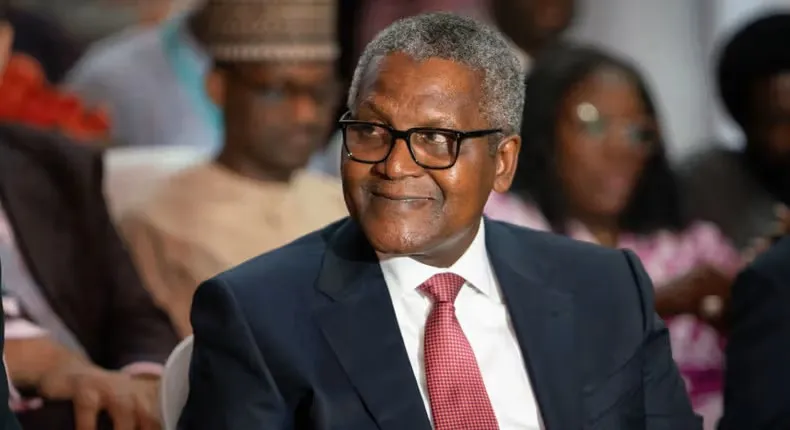
Aliko Dangote has announced plans to build a new oil refinery in Tanzania that will be identical to his flagship facility in Lagos, as part of a broader push to expand refining capacity across Africa.
He made this known on Thursday during a panel session at the Africa Finance Corporation summit held in Nairobi, where he spoke alongside Kenyan President William Ruto and Ugandan President Yoweri Museveni.
The proposed refinery, to be located in Tanga, is expected to process crude from countries including the Democratic Republic of Congo and South Sudan, positioning it as a regional energy hub for East Africa.
Dangote said discussions are already underway with regional leaders to establish a shared facility that benefits multiple countries.
He further assured the leaders present of his willingness to replicate the scale and capacity of his Nigerian refinery in the new project.
The planned Tanzania refinery comes as the Dangote refinery in Lagos, which is now operating at full capacity, increasingly positions itself as a regional supplier of refined products.
In early April, Dangote disclosed that the 650,000 barrels per day facility shipped about 17 cargoes of gasoline to other African countries. Exports of urea fertiliser have also risen in recent days as buyers search for alternative supply sources amid disruptions to global energy markets caused by tensions in Iran.
He added that the refinery, which can produce up to 3 million metric tonnes of urea annually, is now redirecting more shipments within Africa, rather than exporting primarily to the United States and South America.
Dangote’s plan to build another refinery in Tanzania comes as he pursues a major expansion of the Lagos facility, aiming to increase its capacity from 650,000 barrels per day to 1.4 million barrels per day — a move that could make it the largest refinery globally.
Beyond fuel production, the expansion is expected to significantly boost polypropylene output from 900,000 metric tonnes per year to 2.4 million metric tonnes annually, further strengthening the refinery’s role in Africa’s industrial supply chain.