Kiev has intensified its retaliatory long-range strikes in recent weeks, hitting a spate of Russian oil facilities and a luxury high-rise building in Moscow.
It calls the strikes fair retaliation for Russia’s nightly bombing of its cities with drones and missiles.
Related
‘Vile’
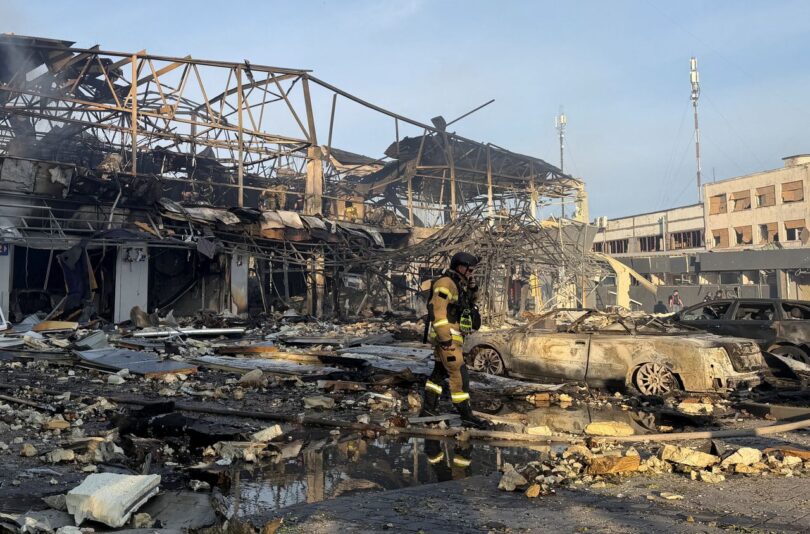
Overnight, a Russian strike killed four people — employees of state energy firm Naftogaz and first responders — in the central Poltava region, triggering outrage in Kiev.
“Two of the killed were first responders, killed in a vile double-tap strike targeting those who arrived to help people at the scene of the attack,” Ukraine’s Foreign Minister Andrii Sybiha said, denouncing Moscow’s “criminal tactics”.
The state emergency service said Russia fired four missiles at the site after an earlier drone hit, publishing video of a fireball erupting at the facility.
One person was also killed in the northeastern Kharkiv region as Russia fired 11 ballistic missiles and 164 drones across the country, according to authorities.
Ukraine has meanwhile intensified attacks deep inside Russia, with authorities nervous about security for the weekend events.
The Russian defence ministry said it had targeted Ukraine’s defence sector and energy sites in response to “attacks on civilian targets in Russia”.
Related
It said Russia had downed more than 300 Ukrainian drones between late Monday and early Tuesday, with several airports across the country temporarily halting flights throughout the morning.
Short-term ceasefires are not infrequent, with the two sides having suspended long-range attacks over Orthodox Easter last month.
There is no sign that the four-year war is close to being resolved at the negotiating table.
Moscow is demanding that Kiev fully withdraw its troops from the eastern Donbas area and renounce Western military support – ultimatums seen as tantamount to capitulation in Kiev, which has rejected them.
On the battlefield, Russia’s progress has stalled, with its army losing more territory than it captured in April for the first time since summer 2023, according to an AFP analysis of data from the Institute for the Study of War (ISW).
The war has spiralled into the bloodiest conflict in Europe since World War II, claiming the lives of hundreds of thousands of people and displacing millions.