
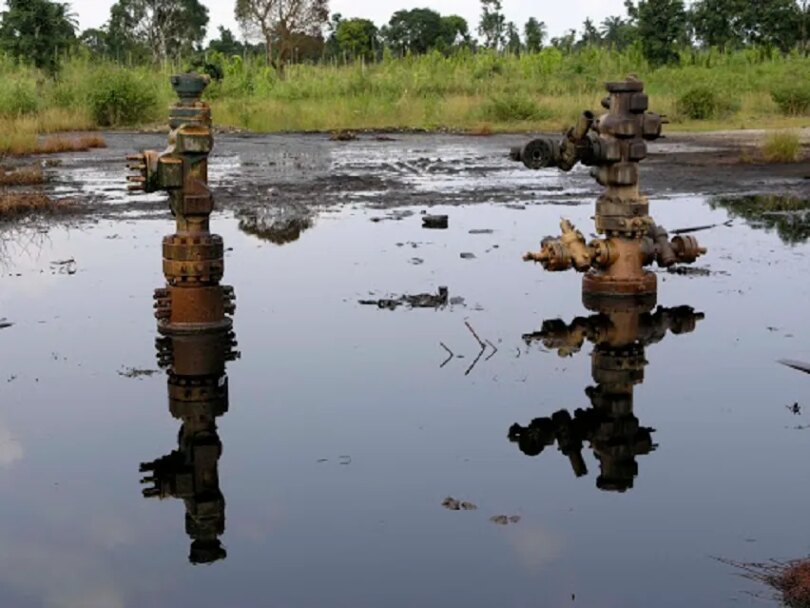
Pipeline Infrastructure Nigeria Limited (PINL) says Nigeria has lost an estimated $226.734 billion in revenue from stalled crude oil production in Ogoniland over the past 32 years.
The group at the company’s monthly stakeholders’ meeting in Port Harcourt called for an urgent, structured restart of operations in the region.
PINL described the resumption of oil production in Ogoniland as a “strategic national priority,” stressing that the process must be driven by host communities and grounded in environmental sustainability.
Speaking at the event, Mr Akpos Mezeh, General Manager, Community and Stakeholder Relations at PINL, said the scale of losses highlights both the cost of inaction and the opportunity ahead.
“Available data shows that over $226.734 billion has been lost due to the suspension of crude oil production from 96 oil wells in Ogoniland over the past 32 years. This clearly underscores both the economic cost of inaction and the immense opportunity that lies ahead,” he said.
Ogoniland, covered under Oil Mining Lease (OML) 11, has the capacity to produce over 500,000 barrels of crude oil per day. Production was halted in 1993 following unrest and environmental concerns linked to oil exploration activities.
PINL outlined key conditions for restarting operations, including active community participation, sustained environmental remediation, adoption of community-based security models, and prioritisation of economic inclusion.
“The position of PINL aligns with growing calls from stakeholders in the Niger Delta for the Federal Government to restart oil production in Ogoniland in a manner that balances economic benefits with environmental justice and community interests,” Mr Mezeh added.
He further affirmed the company’s readiness to support the process, stating: “At PINL, we stand ready to support this process by applying our experience in stakeholder engagement and infrastructure protection to ensure a peaceful, secure, and sustainable resumption.”
PINL maintained that with the right framework, resuming production in Ogoniland could significantly boost Nigeria’s crude output, increase government revenues, and support broader economic growth.