Iran’s foreign ministry said on June 15 that Tehran still holds “deep mistrust” of the United States despite an agreed framework aimed at ending the war. “Unfortunately, it must be acknowledged that Iran’s deep mistrust of the US stems from long history of wrongdoing by American leaders,” foreign ministry spokesman……
Iran’s foreign ministry said on June 15 that Tehran still holds “deep mistrust” of the United States despite an agreed framework aimed at ending the war.
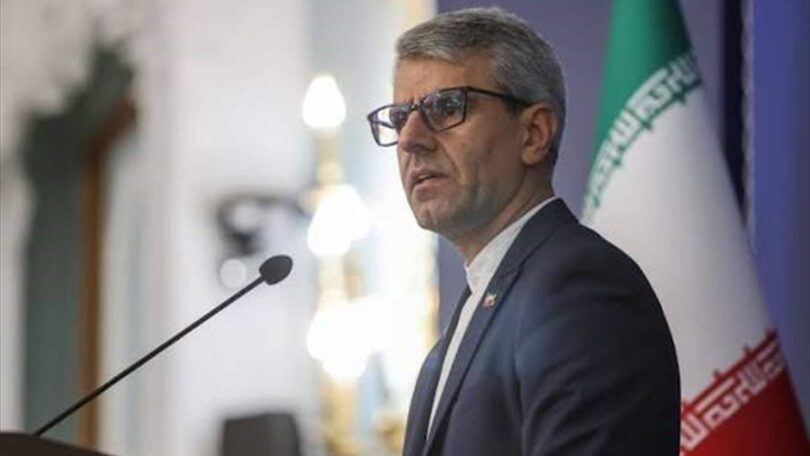
“Unfortunately, it must be acknowledged that Iran’s deep mistrust of the US stems from long history of wrongdoing by American leaders,” foreign ministry spokesman Esmaeil Baghaei said during a press briefing.
“The US still has a long way to go before it can earn the trust of the Iranian people,” he said, adding that the framework was “merely a step towards reducing tensions”.
....: Strait of Hormouz: Trump Announces US-Iran Peace Deal, Removes Naval Blockade
The US and Iran announced a deal to end the Middle East war on all fronts and reopen the vital Strait of Hormuz, sparking relief on June 15 after months of deadly violence and global economic chaos.
The conflict had erupted in late February, with US-Israeli strikes on Iran, which retaliated with attacks on Israel and US allies in the region.
Baghaei said Washington had committed to releasing Iran’s frozen funds abroad and compensating it for damages during the war under the framework deal.
“The release of the frozen Iranian assets as well as the reparations for damages are two essential points. The American side has committed to taking measures in both areas,” he said.
Under the deal, Iran will manage the Strait of Hormuz – a key conduit for global oil supplies that Iran has blockaded since the start of the war – and charge maritime service fees on ships transiting the waterway, rather than imposing tolls.
“We have always maintained that we do not seek to collect transit tolls, but fees for navigation services, environmental protection, ship insurance and other necessary services will be charged,” Baghaei said.
He also said the US must ensure that Israel commits to stopping the war in Lebanon under the framework deal.
Lebanon was dragged into the Middle East war in early March when Iran-backed militant group Hezbollah launched rocket attacks on Israel in retaliation for the killing of Iran’s supreme leader, prompting Israeli strikes and a ground invasion.
Baghaei said “the United States must honour its commitments. It must ensure that the Zionist regime also respects its own regarding Lebanon”.
He added that Tehran “neither trusts Israel nor the US”.
The framework paves the way for 60-day negotiations for a final agreement covering Iran’s contentious nuclear programme and relief of longstanding sanctions against it.
“The final agreement is expected to be endorsed by a United Nations Security Council resolution after a period of 60 days,” Baghaei said, adding that Tehran “will learn from past experience”.
“The adoption of a resolution will be essential… but the most effective guarantee of the implementation of any commitment lies in the leverage and power we have identified over the past three months,” he said. AFP