Advertisement
Advertisement
…Raises fresh questions over Tinubu’s certificate, invokes Constitution’s Section 137(1)(j)
Former Vice President and presidential candidate of the African Democratic Congress, ADC, Atiku Abubakar, has warned the Independent National Electoral Commission, INEC, security agencies and the administration of President Bola Tinubu against militarising the Osun governorship election or using state institutions to gain partisan advantage.
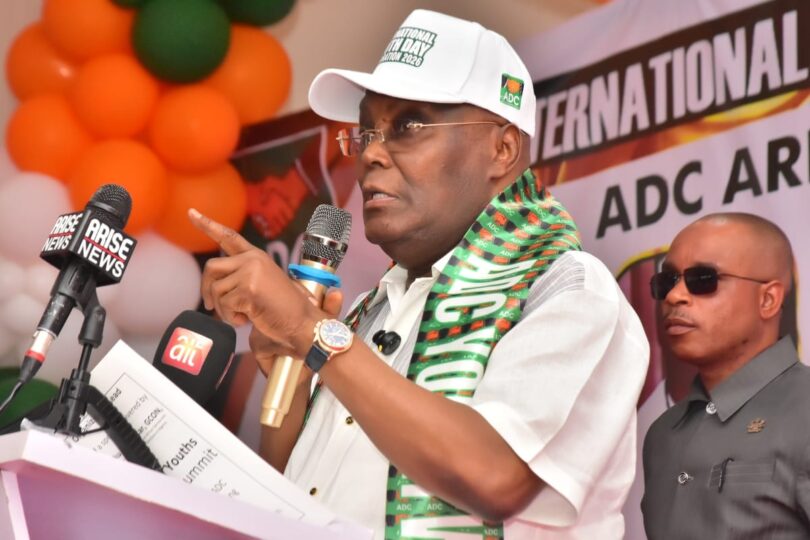
Mr Atiku issued the warning on Tuesday while speaking at the ADC National Youth Leadership Summit in Abuja, where he described the Osun election as a test of Nigeria’s ability to conduct credible elections ahead of the 2027 general elections.
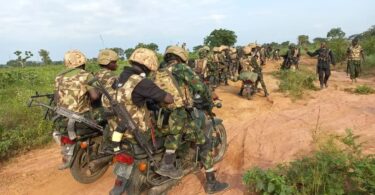
He expressed concern over the scale and posture of security deployment around the election, saying it appeared more suited to a war situation than a democratic exercise.
“Elections are civil engagements, not military operations. Ballot papers are not bullets. Voters are not enemy combatants. Opposition members are not insurgents,” Atiku said.
He questioned why similar security resources were not being deployed against terrorists, kidnappers and bandits responsible for killing Nigerians and attacking communities.
The former vice president also warned INEC against what he described as “mysterious glitches, unexplained delays or manipulation” during the election.
He demanded the timely deployment of electoral materials, unhindered voting, transparent counting and credible transmission of results.
“The police belong to Nigeria. The military belongs to Nigeria. INEC belongs to the Nigerian people. None of them belongs to the APC,” he said.
“The world is watching Osun. Nigerians are watching. History is taking notes. Let the people vote. Let every vote count. And let the will of the people prevail.”
Atiku also renewed his questions over the certificate President Bola Tinubu submitted to INEC in connection with his educational records at Chicago State University (CSU).
He said reported discrepancies between versions of the certificate attributed to CSU warranted clarification, particularly regarding dates, signatures and the description of the degree.
According to Atiku, the certificate submitted to INEC reportedly bears June 22, 1979, while another document produced in connection with CSU records bears June 27, 1979.
He further questioned why names or signatures associated with university officials whose tenures reportedly began years after 1979 appeared on documents bearing that date.
Atiku asked whether replacement certificates were subsequently produced and, if so, who authorised them.
He cited Section 137(1)(j) of the Constitution, which provides for the disqualification of a person from being elected president if the person has presented a forged certificate to INEC, and argued that the specific document submitted to the electoral commission should be authenticated.
“Who produced the certificate Tinubu submitted to INEC? When was it produced? Who authorised it? Why does it differ from the other version, and does Chicago State University authenticate the exact document submitted to INEC?” Atiku asked.
“If a young Nigerian would be required to explain such discrepancies before getting an ordinary job, why should the man seeking Nigeria’s highest job be exempt from the same standard?”
On youth participation in politics, Atiku pledged that at least 30 per cent of legislative candidates under his political programme would be below the age of 40, with a significant number below 30.
He urged young Nigerians to register to vote, organise and take active roles in political leadership rather than limiting their participation to social media activism.
“Anger is not an organisation. A hashtag is not an organisation,” he said.
“Your time is not tomorrow. Your time is now.”