
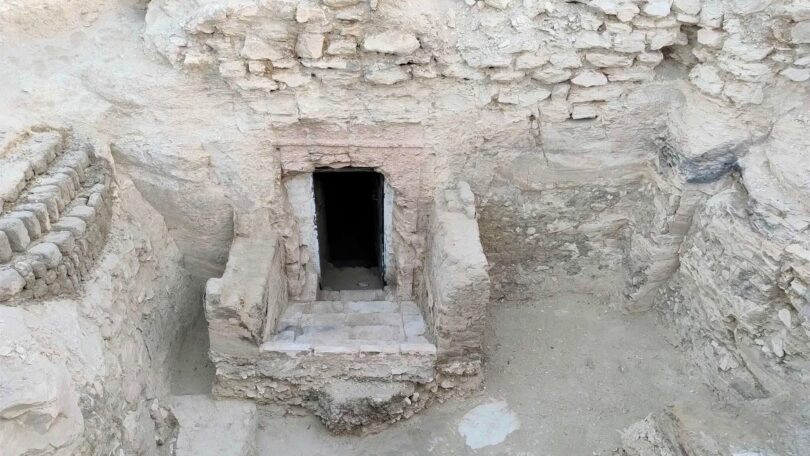
Dutch archaeologists from Leiden University have discovered a 3,000-year-old tomb near Luxor in southern Egypt.
The Egyptian Ministry of Tourism and Antiquities said the tomb belonged to a man named Paser and dates back to the Ramesside period, which lasted from about 1292 to 1069 BC.
The ministry has been working with the Leiden University research team in the area since 2018.
“With our research into the tomb’s painted wall decoration and the archaeological finds, we hope to learn more about Paser and others who were buried in this tomb monument,” team leader and Egyptologist Carina van den Hoven said, according to NOS.
The tomb’s painted walls show Paser worshipping several ancient Egyptian deities. Other artwork shows him sitting with his wife in front of an offering table.
Experts said the structure follows the traditional design of private Theban tombs from the New Kingdom period, which lasted from 1570 to 1069 BC.
The tomb includes an open courtyard leading to a rock-cut chapel shaped like an inverted “T”, along with underground burial chambers.
The discovery was made in the Valley of the Nobles, near the famous Theban Tombs, an area known for some of the world’s most significant ancient monuments and archaeological sites.
Egyptian authorities said the discovery further highlights the country’s importance as a major destination for archaeological tourism.