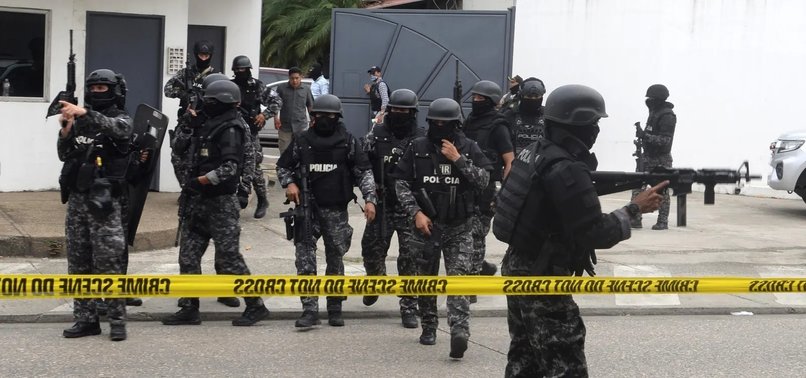
Ecuadorian President Daniel Noboa announced a new nighttime curfew for nine of the country’s 24 provinces on Monday as authorities struggle to contain a persistent wave of organized crime and drug trafficking.
The measure will be in effect from May 3 to May 18, running daily from 11.00 pm to 5.00 am. The restrictions cover key regions, including Pichincha (home to the capital Quito), the coastal hub of Guayas (Guayaquil), and the border provinces of Esmeraldas and Sucumbios, which share frontiers with Colombia. Four additional municipalities in Bolivar, Canar, and Cotopaxi provinces are also included in the decree.
The government said the curfew is intended to “intensify operational efforts and deliver decisive blows to criminal networks.” The move forms part of the “internal armed conflict” framework Noboa declared in early 2024, which designates criminal gangs as “terrorist organizations.”
Noboa, who took office in late 2023, has relied heavily on states of emergency and military-led crackdowns, a strategy increasingly backed by Washington. In March 2026, the US and Ecuador launched joint military operations targeting designated groups, resulting in the destruction of drug camps and illegal mining sites near the northern border.
Despite the militarized response and more than 4,300 arrests in recent months alone, security indicators remain alarming. Ecuador ended 2025 with a record 9,300 homicides, according to Interior Ministry data, placing it among the most violent countries in Latin America.
Authorities estimate that nearly 70% of the cocaine produced in neighboring Colombia and Peru, the world’s top producers, now transits through Ecuador en route to international markets.
Under the new decree, the government has authorized the suspension of several constitutional rights, including the inviolability of the home, allowing security forces to enter residences without a judicial warrant, and the inviolability of correspondence, permitting the interception of communications to counter criminal threats.
While officials point to “concrete results” from recent operations, the export sector, particularly banana and shrimp industries, has raised concerns. Business leaders are calling for clear exemptions to prevent recurring curfews from disrupting the national economy.