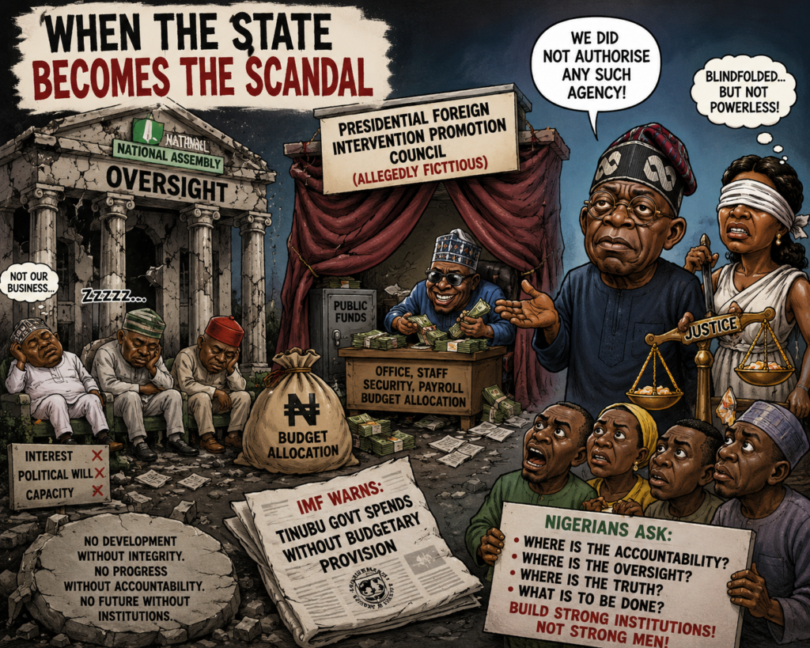
At critical moments in the life of a nation, one question inevitably demands an urgent answer: What is to be done? The quality of that response often determines whether a country overcomes its challenges or sinks deeper into crisis. Failure to respond decisively can imperil not only a government but the very fabric of the state.
Nigeria appears to have reached one of those defining moments.
The events of the past week have taken the country from tragedy into farce. Were they not so damaging, they would make the perfect script for a political satire. An enterprising filmmaker could produce an epic blockbuster worthy of international acclaim. The tragedy, however, is that such episodes continue to diminish Nigeria’s standing before the world, reinforcing long-held stereotypes about Africa’s capacity for accountable and effective self-government.
Reality, it seems, has become stranger than fiction.
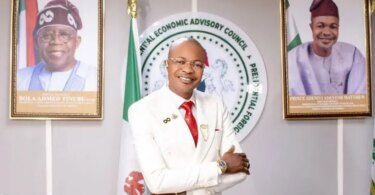
The controversy involving the Presidency, Chief of Staff Femi Gbajabiamila and Adeniyi Adeyemi over the alleged Presidential Foreign Intervention Promotion Council has left Nigerians bewildered. While the Presidency insists the council never existed and has accused Adeyemi of forgery and impersonation, documents circulating in the public domain reportedly indicate that the same body appeared in the 2026 Appropriation Act with a budgetary allocation. Whether the allegations eventually establish fraud, administrative failure or something even more troubling, the questions raised are too serious to be dismissed by mere official denials.
This is not simply another political quarrel. It is a test of the credibility of the Nigerian state.
If an institution now described as fictitious could allegedly operate with offices, staff, security personnel, official correspondence and budgetary provisions, then Nigerians deserve a comprehensive explanation. The issue goes beyond determining who is guilty or innocent. It strikes at the heart of transparency, record keeping and accountability within government itself.
Equally disturbing are recent concerns attributed to the International Monetary Fund over government expenditure allegedly incurred outside approved budgetary provisions. Budgets are not ceremonial documents. They are constitutional instruments through which elected representatives authorise public spending. Any perception that government can routinely bypass that process weakens fiscal discipline, legislative oversight and public confidence.
These developments come at a particularly delicate time. President Bola Tinubu’s administration has defended painful economic reforms, including fuel subsidy removal and foreign exchange liberalisation, on the grounds that they were necessary to restore fiscal stability and rebuild the economy. Nigerians have endured inflation, rising living costs and declining purchasing power in the expectation that government would exercise greater prudence and accountability.
Those sacrifices require moral authority.
Unfortunately, since 2023, the administration has repeatedly found itself responding to allegations involving questionable appointments, procurement controversies, opaque public spending, budget irregularities and accusations of favouritism. Allegations are not convictions, and no individual should be judged without due process. Nevertheless, the recurring nature of these controversies has created a credibility problem that cannot simply be dismissed as opposition politics.
Experience also breeds scepticism. Too often, scandals dominate national conversation for a few days before disappearing without meaningful conclusions. Investigations lose momentum, committees quietly fade away and public attention shifts elsewhere. Those responsible are rarely identified, while institutional weaknesses remain untouched.
Nigeria cannot afford another cycle of outrage followed by collective amnesia.
The present controversy must therefore be investigated thoroughly, independently and transparently. Every individual who created, facilitated or benefited from any fraudulent arrangement must be identified and held accountable, irrespective of office or political affiliation. Equally, if innocent persons have been falsely accused, that too must be established through a credible investigative process.
Yet this episode exposes an even deeper institutional failure.
Once again, it has highlighted the grotesque incapacity of the National Assembly to perform even the most basic oversight functions. Parliament is constitutionally empowered to scrutinise government expenditure and hold the Executive accountable. If a disputed agency could allegedly find its way into official government processes without attracting serious legislative scrutiny, then fundamental questions must be asked about the effectiveness of oversight. The interest, political will and technical capacity required for robust parliamentary supervision appear increasingly absent.
This institutional weakness extends far beyond one controversy. Nigeria’s anti-corruption challenge has never been the absence of laws. It has always been the inconsistent enforcement of those laws and the weakness of institutions entrusted with safeguarding the public interest.
Strong nations are not built on strong individuals. They are built on strong institutions.
Individuals come and go, governments rise and fall, but institutions endure. Until Nigeria learns to place its faith in independent institutions rather than powerful personalities, it will continue moving from one scandal to another, from one embarrassment to the next, while becoming less competitive in an increasingly demanding global economy.
The question, then, remains: what is to be done?
The answer is neither mysterious nor unattainable. The Presidency must embrace transparency rather than defensiveness. The National Assembly must reclaim its constitutional oversight role. Anti-corruption agencies must investigate without fear or favour. Budgetary processes must become more transparent, while every public officer must understand that accountability is not optional but an essential obligation of democratic governance.
Nigeria cannot continue to govern on assurances alone. Credibility is earned through openness, discipline and institutions that function regardless of who occupies public office.
What do you think about this?
Drop your opinion in the comment section.
FOLLOW US & Share this with someone who needs to see this.