Speaking in a hushed voice, Rosa Lopez recalled how she had to sidestep the rows of bodies lying under a harsh sun as she helped her daughter search for her missing husband. Even her years working as a nurse did not prepare her for the sight of the dozens of dead wrapped in sheets or blankets.
“We saw a lot of bodies that had not yet been identified,” Lopez said.
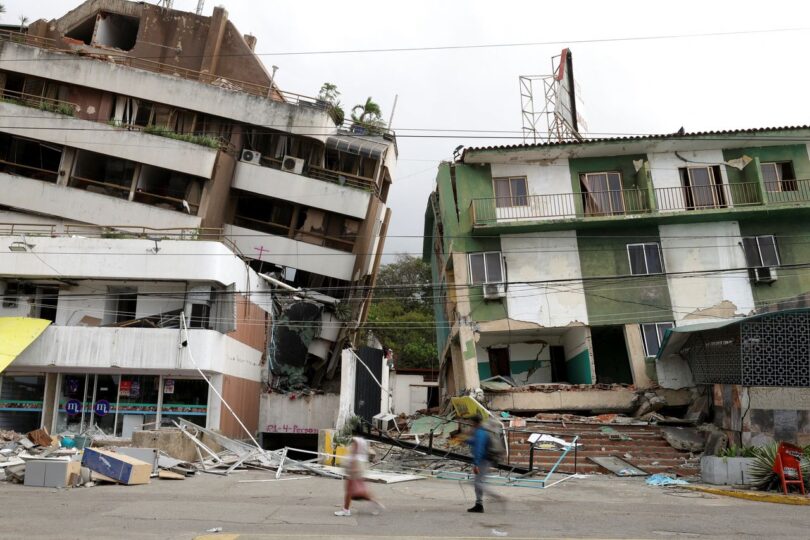
The rush is on across La Guaira, the state on Venezuela’s northern coast hardest hit by the powerful back-to-back June 24 earthquakes, to identify loved ones before it’s too late. With at least 2,295 people killed, Venezuela is overwhelmed with bodies that officials are struggling to collect, identify and preserve for loved ones to claim. Thousands are still missing.
José Antonio Toledo, Lopez’s 25-year-old son-in-law, was found under the building where he was working as a security guard when the quakes struck. Crews took his body to a local hospital, where staff turned them away because there was no space. It was sent to another facility and eventually transferred to an open parking lot.
A forensic doctor helped the family find him days later, on Saturday. But once they identified his body, they didn’t know what to do with it because they couldn’t afford the $450 that a funeral home was charging.
At almost midnight on Saturday, Lopez got word that the mayor’s office was offering them a free space at a local cemetery, but they had to move quickly to avoid losing the spot. An hour later, Lopez and her daughter trudged up a hill leading to the cemetery and buried Toledo.
“He was an exemplary person, a boy who liked helping people,” Lopez said.
They saved him from a mass grave that many fear is coming as they search for the bodies of their loved ones.
Related
The number of bodies found is expected to soar
Forensic technician Joel Mirabal has worked for seven days straight since the 7.2 and 7.5 magnitude earthquakes struck.
The 45-year-old estimates that in 60-70 percent of cases, there’s a relative or neighbour available to identify a body when he comes to pick it up. Even so, it’s a struggle, he said, with many relying on tattoos, scars or familiar clothing.
“They don’t look even 10 percent like what they were in real life,” he said of the victims.
If a body cannot be identified, it goes to forensic specialists working at La Guaira seaport. Private companies have donated large cooling containers to help preserve the bodies, but the number of dead keeps growing.
“Obviously, mass graves will have to be created,” Mirabal said. “The collapse is massive, and the bodies are buried under many layers of debris.”