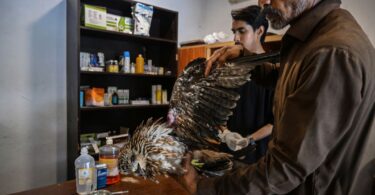
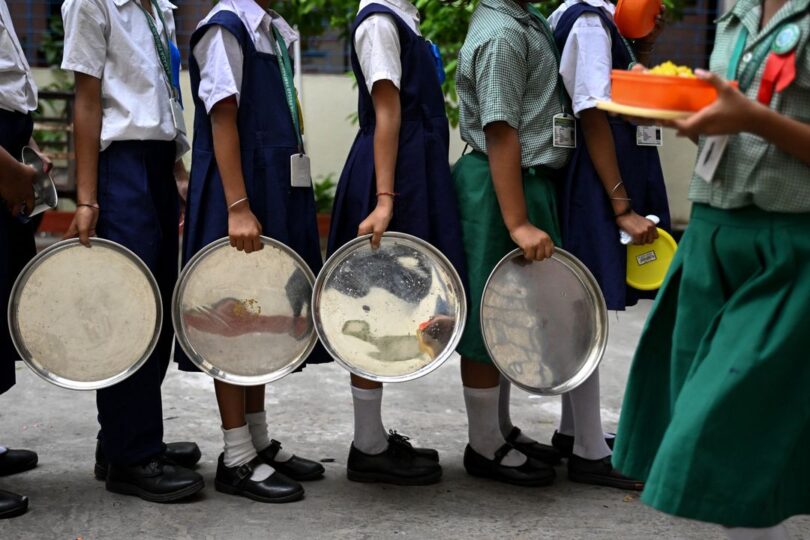
Teacher Raja Dey fears attendance might drop now that government-run schools have stopped serving eggs for lunch in his eastern Indian state, a dietary change that has stirred a political storm.
The humble egg, a popular food in West Bengal, was taken off the menu after the state’s recently elected Hindu nationalist government said a religious charity will provide free, vegetarian cooked meals in state-run schools.
The new arrangement has rekindled a long-running debate over food, faith and nutrition in the world’s most populous country, with critics accusing the government of trying to turn schoolchildren vegetarian.
Prime Minister Narendra Modi’s party, which swept to power in West Bengal for the first time in regional elections held in May, often promotes vegetarianism as a part of its nationalist agenda, although most Indian Hindus eat meat and fish.
Eggs, which Hindus generally consider non-vegetarian, are even more widely consumed.
Former West Bengal chief minister Mamata Banerjee, whose regional Trinamool Congress (TMC) lost May’s vote after 15 years in power, has denounced the move to remove eggs from school meals as going “against the culture” of the state, home to more than 100 million people.
“The BJP government is trying to impose vegetarianism on school children,” TMC lawmaker Dola Sen said.
Some teachers have expressed concerns over attendance rates as well as good nutrition.
“The mid-day meals have been one of the biggest attractions in state-run primary schools,” teacher Dey said.
Related
World’s largest school lunch scheme
While there is no nationwide data linking eggs to attendance in government-run schools, Dey said that “students turn up in large numbers on days when eggs are provided”.
In the southern state of Karnataka, official figures from last year showed that attendance rose from 93.5 to 98.97 percent after egg distribution had been expanded to six days a week.
In West Bengal, eggs, previously served once a week, were replaced last month with plant-based alternatives as the state government tapped the International Society for Krishna Consciousness (ISKCON) – commonly known as the Hare Krishna movement – as the new provider of school meals.
ISKCON is the leading provider of India’s school lunches – the largest such programme in the world, according to the UN – and serves only vegetarian food.
The lunch scheme is widely acknowledged to have improved enrolment rates across the country, with multiple peer-reviewed research papers identifying an increase of up to 15 percent.