0
Wilson Macaulay
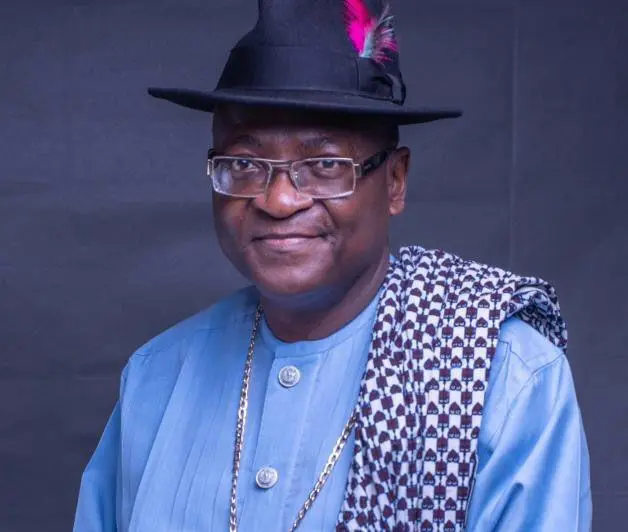
In the ever-changing landscape of Nigerian politics, where public trust in leadership has often been eroded by corruption, betrayal of public confidence, and the pursuit of selfish ambition, the emergence of certain personalities into governance sometimes appears beyond ordinary political calculations. Such personalities come with unusual grace, consistency, resilience, and uncommon favor that leave even their critics bewildered. One of such remarkable figures in contemporary Delta State politics is Rt. Hon. Rev. Ejiroghene Waive.
The story of Rt. Hon. Rev. Ejiroghene Waive is not merely the story of a politician seeking relevance in governance; rather, it is the unfolding of what many observers have come to describe as a divine project carefully orchestrated by Providence for a higher purpose. His journey from the banking sector into the vineyard of God, and subsequently into the turbulent waters of Nigerian politics, presents a trajectory that continues to inspire admiration, provoke reflection, and strengthen the belief that divine destiny can still manifest within the sphere of public service.
Before venturing into ministry and politics, Waive distinguished himself in the banking profession where he built a reputation for diligence, discipline, integrity, and professional excellence. Those who encountered him during his banking career testify to his uncommon dedication to duty, humility in human relations, and capacity for leadership. In an era where many pursued wealth and personal advancement as the ultimate goal, Waive’s disposition reflected deeper values rooted in moral conviction and spiritual consciousness.
However, beyond the corporate environment, there appeared to be a higher calling upon his life. At a point when many would have continued climbing the corporate ladder in pursuit of economic comfort and social prestige, Rt. Hon. Rev. Ejiroghene Waive responded to what evidently became a divine summons into Christian ministry. His transition from banking into pastoral work surprised many, yet it soon became obvious that he possessed both the spiritual depth and moral conviction necessary for ministerial assignment.
As a preacher of the Gospel, Waive demonstrated exceptional passion for soul-winning, moral transformation, and practical Christianity. His messages penetrated deeply into people because they were not merely intellectual sermons but reflections of conviction, compassion, and personal discipline.
Congregations under his spiritual influence experienced not only theological teaching but also inspiration toward ethical living and societal responsibility. Many who listened to him were left in no doubt that he carried a genuine divine mandate.
Indeed, his pastoral ministry earned him admiration across denominational and social divides. He became known not only as a preacher but also as a counselor, bridge-builder, mentor, and advocate of peace. At that stage, many assumed his destiny was permanently tied to the pulpit and that his influence would remain within ecclesiastical boundaries.
It was therefore understandable that when Rt. Hon. Rev. Ejiroghene Waive ventured into politics, many observers reacted with skepticism and uncertainty.
In Nigeria’s political environment, where compromises, betrayals, and moral contradictions have become common, the entry of a respected clergyman into partisan politics naturally raised concerns. Several people feared that the purity of his spiritual values would eventually be diluted by the harsh realities of political struggle.
Even close admirers privately wondered whether his moral convictions could survive the pressure of political contests. Some feared he might lose his spiritual identity or become entangled in the destructive culture often associated with Nigerian politics.
Such concerns were not entirely baseless, considering the experiences of several public figures whose integrity diminished after entering political office.
Yet, contrary to those fears, the political journey of Rt. Hon. Rev. Ejiroghene Waive has continued to defy conventional expectations. Instead of political decline or moral compromise, his entrance into politics has been marked by consistent victories, expanding influence, growing popularity, and visible achievements.
His political trajectory has increasingly strengthened the perception that his involvement in governance is connected to a higher divine purpose.
One of the most striking features of Waive’s political career is the unusual pattern of favor and strategic victories surrounding his campaigns and public engagements. Repeatedly, political battles that appeared difficult often ended in his favor through circumstances that many interpret as evidence of divine intervention.
In several instances, opponents who mobilized aggressively against him eventually became divided among themselves, thereby creating pathways for his emergence and consolidation.
This recurring pattern has led many political observers to conclude that Rt. Hon. Rev. Ejiroghene Waive operates under a unique grace that transcends ordinary political calculations.
His victories have often carried the marks of providence rather than mere human strategy. While political intelligence, grassroots connection, and organizational structure remain important factors in electoral success, there are moments in leadership history where outcomes appear guided by forces beyond human orchestration. Waive’s political journey increasingly fits within such interpretation.
As a legislator representing the Ughelli South, Ughelli North, and Udu Federal Constituency, Waive has demonstrated that politics can still be used as an instrument of service, development, and responsible representation.
His performance in office has reflected a commitment to constituency engagement, infrastructural advocacy, youth empowerment, educational support, and legislative intervention on matters affecting national growth and regional development.
His accessibility to constituents, calm disposition, and ability to relate with ordinary people have further distinguished him in contemporary politics.
Unlike many politicians who disconnect from the grassroots after electoral victory, Waive has consistently maintained close ties with his constituency, thereby strengthening public trust and political goodwill.
Another significant dimension of his political life is the retention of his spiritual identity despite the pressures of political office. Many who encounter him today still see traces of the preacher, counselor, and moral advocate he was before entering politics.
His public conduct continues to reflect restraint, humility, and civility even in moments of intense political provocation. This consistency has helped preserve the confidence of those who initially feared that politics would negatively transform him.
Furthermore, Waive’s political relevance has extended beyond electoral victories into broader ideological influence.
To many young Nigerians, especially within Delta State, he represents the possibility that integrity, spirituality, and public service can coexist within governance.
His life challenges the cynical assumption that politics must inevitably corrupt every individual who participates in it.
The Nigerian political environment urgently needs leaders whose lives inspire moral confidence and whose public conduct promotes social trust. In societies where citizens have become increasingly disillusioned with leadership failures, personalities like Rt. Hon. Rev. Ejiroghene Waive offer a refreshing alternative capable of restoring hope in democratic participation.
Beyond personal achievements, Waive’s journey also carries theological and philosophical significance. Throughout biblical history, divine purpose has often manifested through unlikely transitions. Shepherds became kings, fishermen became apostles, and ordinary individuals became instruments for national transformation. In the same manner, the transition of Waive from banking to ministry and eventually into politics reflects a progressive unfolding of destiny that appears guided by divine orchestration.
It is important to emphasize that describing his political journey as a divine project does not imply perfection or immunity from criticism. Democracy thrives on accountability, constructive engagement, and continuous evaluation of public office holders. However, the extraordinary consistency of favor, resilience, acceptance, and achievement surrounding his career cannot easily be dismissed as coincidence.
The evidence available within public discourse increasingly suggests that Rt. Hon. Rev. Ejiroghene Waive’s political emergence represents more than ordinary ambition. His life reflects the convergence of spiritual preparation, leadership discipline, moral conviction, and providential timing. Such convergence often produces leaders whose influence transcends personal gain and contributes meaningfully to societal development.
Today, as Nigeria continues to search for transformational leadership capable of rebuilding public trust and strengthening democratic institutions, the example of Rt. Hon. Rev. Ejiroghene Waive stands as a compelling testimony that divine purpose can still find expression within governance. His story reminds society that politics, when approached with integrity and higher purpose, can become a platform for service rather than exploitation.
Indeed, from the banking halls to the pulpit, and from the pulpit to the National Assembly, the journey of Rt. Hon. Rev. Ejiroghene Waive continues to reveal the signature of Providence. His entrance into politics was not accidental. It was not merely strategic. It was not simply ambitious. Increasingly, both supporters and neutral observers are coming to one inevitable conclusion: the entrance of Rt. Hon. Rev. Ejiroghene Waive into politics is truly a divine project.
Wilson Macaulay is a Journalist Author, Good Governance and development advocate based in Warri Contact @08030886420 Whatsapp only