
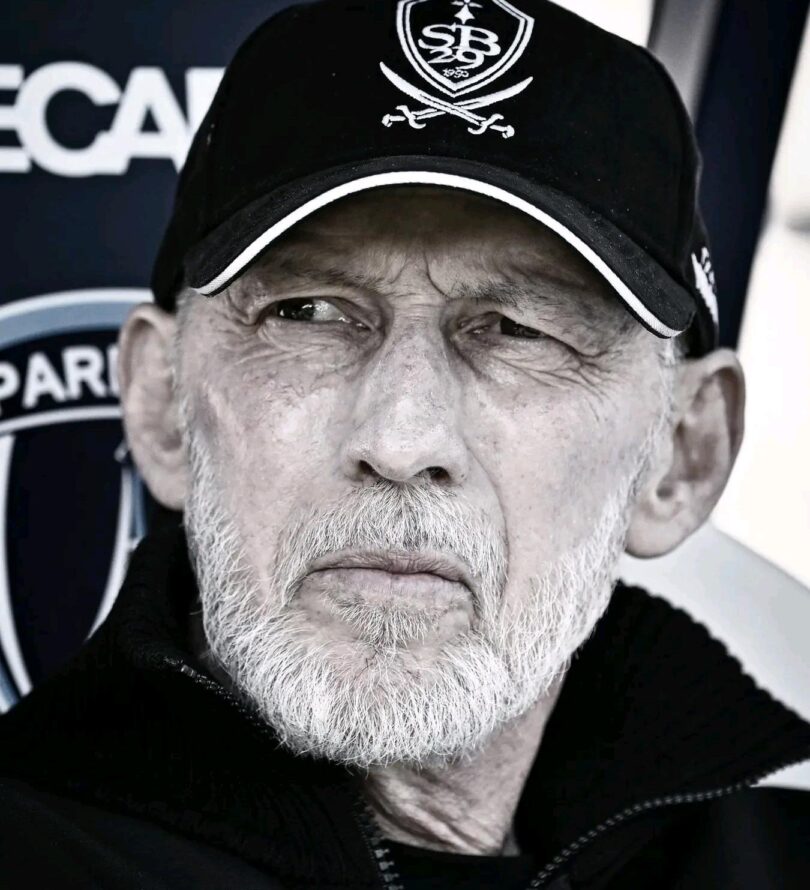
Brest manager Eric Roy was diagnosed with stage four pancreatic cancer shortly after taking charge of the French club, but chose to keep the illness private while continuing his work, according to his wife, Lœtitia Roy.
In an emotional interview, Lœtitia revealed that Roy was diagnosed with advanced pancreatic cancer with metastases throughout his body just days after signing his contract with Brest.
Roy signed for the club on December 31 and travelled to Brest the following day. After about five days, he complained of severe stomach pain and was examined by the club doctor, Kergastel.
According to his wife, doctors subsequently told the couple that Roy had stage four pancreatic cancer and that the prognosis was extremely poor.
“He told me: ‘We’re going into fighter mode together!’” she recalled.
Despite the diagnosis, the couple decided that Roy would continue working and fulfil his contract with Brest while undergoing intensive chemotherapy.
Lœtitia said doctors initially questioned the decision because of the demanding treatment Roy was expected to undergo, but she believed remaining involved in football would help him maintain his strength and focus.
At the time, Brest were battling to avoid relegation, and Roy had been appointed manager to help the club escape the threat of dropping into the second division.
His wife said Roy deliberately chose not to disclose his condition to the players because he feared it would affect their relationship with him and alter the way they viewed him as their manager.
“If you arrive saying: ‘Hello, I have cancer, I might die in a few months,’ it’s not going to work,” she said.
Only Brest president Denis Le Saint and sporting director Grégory Lorenzi were informed about his condition. According to Lœtitia, both officials supported Roy and assured him that he could take time away whenever necessary.
The couple decided that keeping the diagnosis private would allow Roy to concentrate on his responsibilities without having to deal with the fear and sympathy of others.
“We then thought it would be difficult to deal with other people’s fear. And he wanted to work peacefully and didn’t want his relationships with people to change,” Lœtitia said.
She added that Roy was determined not to be treated differently because of his illness.
“He refused to be the sick man of the group. He didn’t want people’s pity, nor did he want any special treatment,” she said.
Roy’s decision to continue coaching despite the diagnosis reflected his determination to remain focused on football while undergoing treatment for the life-threatening illness.