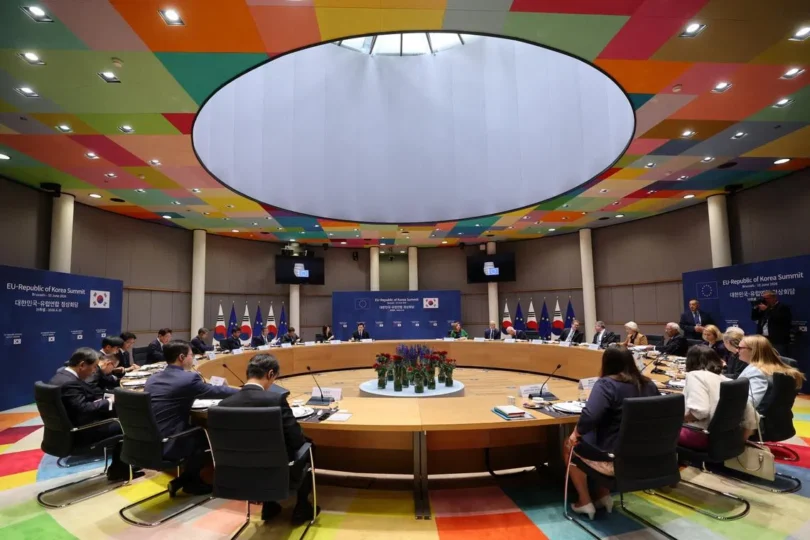
BRUSSELS, June 11 – The European Union’s budget for 2028-2034 should be 2% smaller than the 2 trillion euros proposed last year, the Cypriot EU presidency proposed on Thursday, opening months of negotiations on what EU policies should get funding.
The compromise, called a negotiating box and prepared after months of consultations with the EU’s 27 governments, suggests a smaller increase in spending on defence and competitiveness than initially proposed by the Commission in July 2025.
It also proposes slightly more money to support farmers and to equalise standards of living across the EU, but retains the overall deep reduction in such spending as the EU wants to shift resources to better compete with China and the United States in new technologies and fend off the threat of Russian aggression.
“It does not mean everyone is happy – it is a compromise,” Cypriot deputy Minister for European Affairs Marilena Raouna told a news conference of the proposal.
“The presidency has the task to put the first numbers on the table. (There is) a modest reduction of the budget of 2% while at the same time addressing the concerns of a sizeable group whose GNI is below 90% of the EU average,” she said, referring to countries who get more cash from the budget than they pay in.
“We believe this is a balanced compromise, that can serve as a basis for negotiations that are ahead of us,” she said.
But countries that pay to the EU budget more than they get out have called for much deeper cuts than 2%.
“For the Netherlands, this is a no-go box,” said Dutch Finance Minister Eelco Heinen. “The proposal finances yesterday’s priorities at the expense of tomorrow’s challenges.”
Those who believe the budget should be bigger to pay for new challenges facing Europe, also criticised the presidency compromise.
“The Council’s proposal sends entirely the wrong signal. By cutting the Commission’s proposal overall by 2%, it effectively suggests that Europe’s challenges require less action, not more,” said Siegfried Muresan, the European Parliament’s lead co-rapporteur on the budget.
“We reiterate our call for a moderate 10% increase in the budget in order to adequately finance both traditional and new priorities,” he said.
EU officials said the overall size of the budget and the allocation of money is likely to be substantially changed before EU leaders reach a deal that they would like to see by December. REUTERS