NATO’s Ankara summit this week will demonstrate to US President Donald Trump that European allies are stepping up to contribute more firepower to the alliance, Germany’s deputy defence minister said.
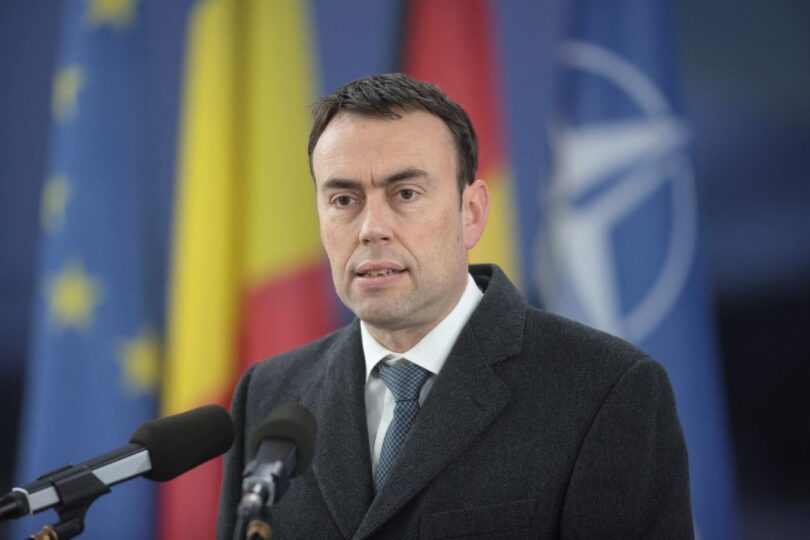
“Trump can be sure that burden shifting is not just a slogan, it’s in action, and we’ve seen this not only in Germany, but among other European member states,” Nils Schmid said in an exclusive interview with Anadolu.
“We expect the Ankara summit to send a clear signal of unity, to strengthen the transatlantic bond, and to make clear that from both sides of the Atlantic, NATO is the central institution for collective defence.”
The July 7–8 summit in Türkiye’s capital will bring together leaders from all NATO members, alongside top military commanders and defence and foreign ministers. Trump’s decision to attend, after months of strained relations with European allies, has raised the stakes for the crucial gathering.
Responding to Trump’s sharp criticism that European allies are not contributing enough to NATO’s military expenditure, Schmid said members have already begun significantly increasing defence budgets and are moving to meet targets set at NATO’s 2025 Hague summit.
Leaders there agreed to raise the benchmark for core defence spending to at least 3.5 percent of GDP, up from 2 percent.
“I would like to note that all European allies now pass the threshold of the 2 percent spending target, which was set for the last period in NATO, and now more and more of the European allies are well on the way to bring their military expenditure up to 3.5 percent of GDP,” Schmid said.
“Of course, there’s a diverse picture across European member states, but I can tell you that Germany, as the second-largest economy inside NATO after the US, is now set to meet this target by 2029, well ahead of the date that was set, which is 2035,” he said.
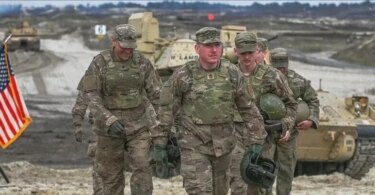
At the Ankara summit, allies are expected to review progress on those spending targets while seeking clarity on key strategic issues, including the future of US security guarantees for Europe, potential changes in American troop levels on the continent, and whether Washington will maintain critical military capabilities to support European defence.
The discussions come just weeks after US Defence Secretary Pete Hegseth announced a Pentagon “NATO 3.0 review” of America’s military footprint in Europe, which he said would accelerate a “fast and irreversible” shift toward greater European self-reliance and free US forces to address broader global priorities.
Related
Europe seeks timetable for US troops’ withdrawal
Schmid said the Trump administration’s announcement that it plans to reduce troop levels in Europe did not come as a surprise.