
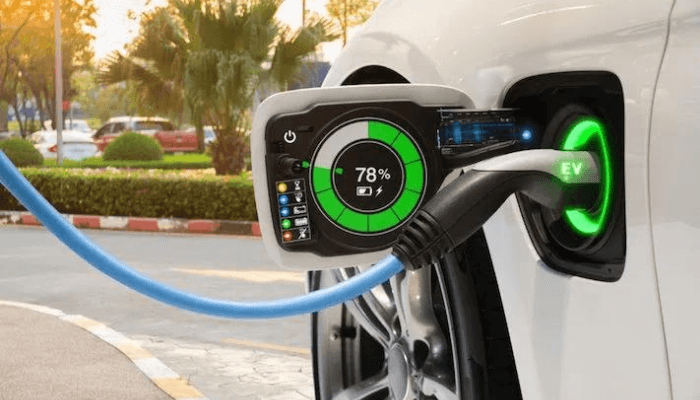
The Federal Government’s decision to remove import duties on electric vehicles (EVs) has triggered optimism across the mobility sector, with industry players projecting lower prices and faster adoption, even as concerns grow over intense competition and market disruption.
The policy, introduced under President Bola Ahmed Tinubu’s administration in mid-April, eliminates the 5% import duty on EVs and exempts them from green taxes imposed on high-emission vehicles.
While the move is expected to ease inflationary pressures and promote clean mobility, stakeholders say it could also usher in a highly competitive phase that may reshape the structure of Nigeria’s emerging EV market.
Industry players say the policy marks a turning point for EV adoption, but caution that it could trigger aggressive pricing competition and strain local capacity.
Speaking on the sector’s outlook, Roxettes Group Chairman Dr. Kaycee Orji said the company, through Roxettes Motors, has deliberately championed electric vehicle adoption in Nigeria for several years, producing electric, hybrid, and internal combustion engine vehicles.
He warned that without a clearly defined EV transition strategy, Nigeria risks becoming a dumping ground for used ICE vehicles from countries enforcing strict phase-out timelines.
He added that the legislation also aims to protect local investors by discouraging indiscriminate licensing of foreign EV assemblers without strong local partnerships, while proposing incentives such as special number plates to distinguish electric vehicles from ICE vehicles.
Stakeholders broadly agree that while the policy will boost demand, the speed of adoption may outpace supply chains and infrastructure readiness.
The removal of import duties is part of a broader push by the government to promote clean energy transition and reduce transportation costs in the face of rising fuel prices.
However, industry experts warn that demand-side incentives alone may not be sufficient to build a sustainable EV ecosystem.
Infrastructure providers expect a surge in demand for charging stations, with electricity access emerging as a key constraint.
Some stakeholders also highlight the risk of Nigeria becoming a dumping ground for used internal combustion engine (ICE) vehicles if clear transition policies are not enforced alongside EV incentives.
The proposed Electric Vehicle Transition and Green Mobility Bill, 2025, is seen as a critical framework to guide adoption, encourage local assembly, and ensure long-term industry development.
Naijaonpoint previously reported that the country’s automotive and energy experts remain sharply divided over whether the nation is ready for a large-scale transition to electric vehicles (EVs).
The National Bureau of Statistics (NBS) reported that Nigeria’s passenger car imports rose to N1.58 trillion in 2025, reflecting a rebound in demand.
Despite the increase, passenger cars represented only 2.34% of Nigeria’s total imports, which stood at N67.35 trillion in 2025.
Total imports grew by 11.14% YoY, from N60.59 trillion in 2024, suggesting that while car demand is rising, it is being outpaced by growth in other import categories.