
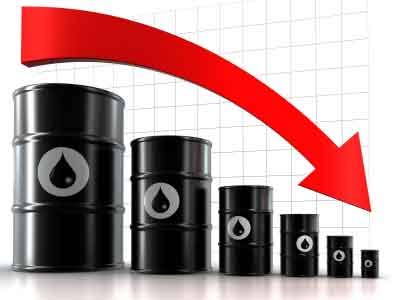
The Federal Competition and Consumer Protection Commission, FCCPC, has raised concerns over what it described as the failure of petroleum marketers to reflect the sharp decline in global crude oil prices in pump prices, warning that exploitative practices will attract regulatory sanctions.
In a statement issued by the Commission’s Director of Corporate Affairs, Ondaje Ijagwu, the FCCPC said its ongoing surveillance of the downstream petroleum sector revealed that reductions in gantry prices by local refiners, depot operators, marketers and retail outlets have been minimal and do not correspond with the significant drop in international crude oil prices.
The Commission noted that while the downstream petroleum sector operates under a deregulated pricing regime, businesses remain bound by the provisions of the Federal Competition and Consumer Protection Act, FCCPA, 2018, which prohibits unfair, deceptive and anti-competitive practices.
While reacting to the findings, the Executive Vice Chairman of the FCCPC, Mr. Tunji Bello, stressed that although the Commission does not regulate or approve fuel prices, it has a statutory responsibility to ensure fair competition and protect consumers from exploitation.
“To be clear, the Commission does not regulate or approve petroleum prices in a deregulated downstream market. Our responsibility under the Federal Competition and Consumer Protection Act, 2018, is to promote competitive markets, prevent anti-competitive conduct, and protect consumers from unfair, deceptive and exploitative business practices.
“We are concerned that while dealers often respond swiftly by hiking pump prices whenever crude prices rise, it is curious that it is taking forever for consumers to benefit significantly when crude prices fall. Competitive markets must work fairly in both directions,” Bello said.
According to the FCCPC, global crude oil prices have declined significantly following the ceasefire between the United States and Iran and the reopening of the Strait of Hormuz, falling to about $73 per barrel from a peak of around $120 per barrel recorded in April. The Commission noted that international oil prices have now returned to levels recorded in February.
It recalled that during the period of heightened geopolitical tensions between April and May, petroleum marketers swiftly increased pump prices, with petrol selling for between ₦1,350 and ₦1,500 per litre, while diesel prices rose to about ₦2,000 per litre.
By comparison, petrol sold for between ₦800 and ₦900 per litre in February. Despite the recent decline in crude prices, the Commission observed that PMS still averages about ₦1,200 per litre nationwide, even though some local refiners have reduced gantry prices to between ₦1,025 and ₦1,075 per litre.
While acknowledging that domestic fuel prices are influenced by several factors, including refining costs, foreign exchange fluctuations, logistics, financing and distribution expenses, the FCCPC maintained that consumers should reasonably benefit from lower production costs in a competitive market.
Bello warned that market liberalisation does not exempt operators from complying with consumer protection and competition laws.
“Market liberalisation does not diminish businesses’ obligations to compete fairly or consumers’ right to fair treatment. Where credible evidence indicates conduct that undermines competition, exploits consumers or otherwise contravenes the Federal Competition and Consumer Protection Act, the Commission will investigate and take appropriate enforcement action,” he said.
The FCCPC also urged consumers to report suspected cases of anti-competitive conduct, misleading pricing practices and other unfair market behaviour through its established complaint channels.