The Federal Capital Territory Administration has commenced the desilting and clearing of drainage channels across Abuja, following Tuesday’s heavy downpour that affected parts of the territory.
The exercise was ordered by the FCT Minister, Nyesom Wike, after the heavy rainfall that flooded the Airport Expressway and other parts of the city.
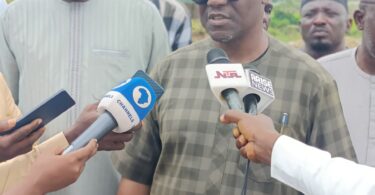
Inspecting the ongoing clearance operation along the Airport Expressway on Thursday, the Acting Executive Secretary of the Federal Capital Development Authority, Engr. Richard Dauda, said the exercise was aimed at restoring the capacity of the drainage system ahead of further heavy rainfall.
Dauda said the operation covers trapezoidal drains, U-channels and culverts across the city, while new construction would be undertaken at locations where existing drainage infrastructure requires additional intervention.
“The authority has reported to the minister, and the minister has directed that all the drains, the trapezoidal drains, U-channels along the road, as well as the culverts are to be deployed and they are being desilted and cleared, and where new construction is required, that will be done.”
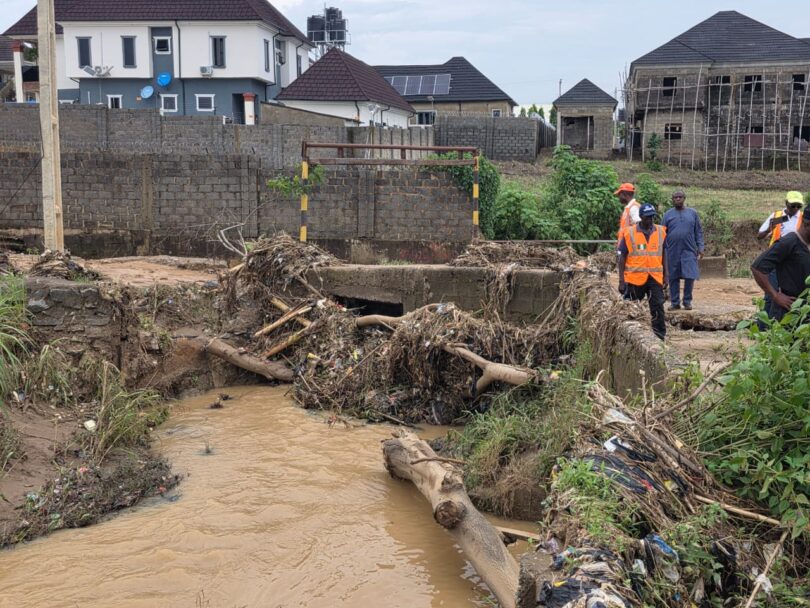
He said desilting was already ongoing along the Airport Expressway, particularly at drainage points affected by accumulated silt, vegetation and refuse.
Dauda said the recent flooding was worsened by the blockage of drainage facilities with refuse and other debris washed into the channels during rainfall.
“Some debris that have been washed from the neighborhood. Polythene bags and so on, they all end up in the drain. People have their waste, they drop it in the drain, and they all end up at the outlets of these culverts.
“And when it comes like this, it begins to block the outlets. And once the outlets are constricted, the volume of water it is designed to drain may not be achieved anymore.”
He also identified the constriction of waterways by developers and the theft of drainage covers by vandals as factors affecting the performance of the city’s drainage infrastructure.
According to Dauda, a developer had constricted a waterway downstream of a major culvert along the Airport Expressway by constructing retaining walls, thereby reducing the volume of water the channel could carry.
“Now, what that causes is that the volume of water that ought to pass no longer passes. This causes detention and backflow, and eventually, it overflows. Then we get flooding.”
Dauda said the structure would have to be removed to restore the waterway to its required width and improve its discharge capacity.
“So, what needs to be done is to remove this structure that the developer has put there so that we can have the adequate volume of discharge and adequate width of the stream channel.”
The FCDA boss also said the removal of gully inlet covers by vandals allows debris to enter drainage systems unchecked, further contributing to blockages.
“When these gully inlets covers are stolen, it opens the drains. Now, the inlets are supposed to sieve the debris so that it can be swept up, but once it is no longer there, all debris now goes into the gully inlets.”
He said the FCDA was considering the use of materials that were not recyclable, instead of steel and cast iron, for replacement covers to discourage vandalism.
Dauda appealed to residents to stop dumping refuse into drainage channels and waterways, saying the effectiveness of the infrastructure depended partly on public cooperation.