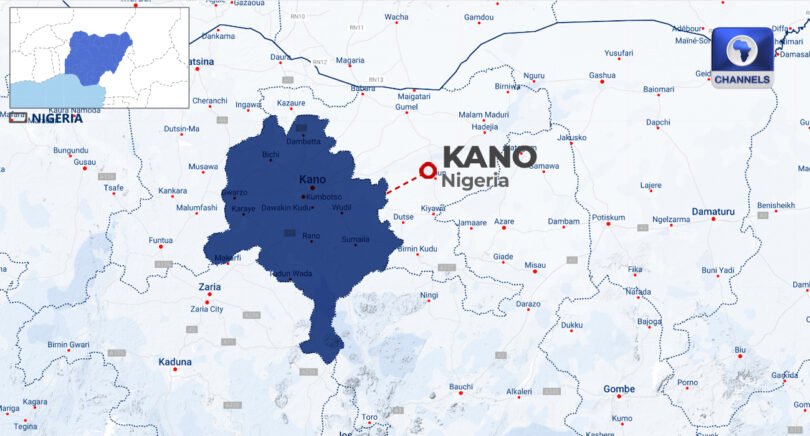
The Federal Government has flagged off the 2026 national tree planting campaign and commissioned the new headquarters of the National Agency for the Great Green Wall (NAGGW) in Kano State as part of efforts to combat desertification and restore degraded lands across Northern Nigeria.
The event, held on Thursday in Kano, also marked the commemoration of the 2026 Great Green Wall Day and the inauguration of the National Steering Committee for the Scaling-Up Resilience in Africa’s Great Green Wall (SURAGGWA) Project.
Speaking at the ceremony, the Minister of Environment, Balarabe Abbas Lawal, said the initiative aligns with the Federal Government’s commitment to environmental sustainability under President Bola Ahmed Tinubu’s Renewed Hope Agenda.
“Healthy ecosystems are indispensable to food security, economic growth, climate resilience, and the well-being of our people,” he said.
Lawal described this year’s theme, “The Green Shield: Restoring Landscapes to Silence the Sand and Dust Storms,” as timely, noting that sand and dust storms are increasing in frequency across Northern Nigeria and the Sahel region.
“The solution lies in restoring our degraded landscapes. The Great Green Wall Initiative remains Africa’s flagship response to desertification and climate change,” he stated.
The minister added that the relocation of the NAGGW headquarters to Kano reflects the state’s strategic role among the eleven frontline states combating desert encroachment.
Highlighting achievements of the agency, Lawal disclosed that over 48 million tree seedlings have been raised nationwide, leading to the establishment of thousands of hectares of shelterbelts, orchards, woodlots, and other restoration projects.
He said, “Planting a tree is only the beginning. Protecting and nurturing it is the true measure of our commitment.”
Director-General of NAGGW, Saleh Abubakar, said the agency has recorded measurable progress in environmental restoration and livelihood support.
“We have raised over 48 million indigenous tree seedlings and established thousands of hectares of shelterbelts, orchards, and woodlots across the frontline states,” he said.
Abubakar added that over 10.8 million drought-resistant seedlings and more than 869,000 date palm seedlings have been distributed to farmers to support agroforestry and boost rural incomes.
He also noted investments in renewable energy and rural infrastructure, including solar home systems, boreholes, and irrigation pumps, aimed at strengthening community resilience.
“These achievements reflect the Federal Government’s commitment to sustainable livelihoods and environmental restoration in Northern Nigeria,” he said.
In his remarks, Kano State Commissioner for Environment and Climate Change, Dahiru Hashim, described the relocation of the agency’s headquarters to Kano as a landmark decision.
“This is more than a ceremonial exercise. It symbolises a renewed partnership between the Federal Government and Kano State to restore degraded landscapes and improve livelihoods,” he said.
Hashim said Kano has made significant progress in climate action, including planting millions of trees and restoring over 50,000 hectares of degraded land.
“In 2024, we planted three million trees. In 2025, we expanded to over five million trees through active community participation,” he stated.
He added that Kano has improved its climate governance ranking from 34th in 2024 to 4th in 2025, positioning the state as a leader in environmental management.
The commissioner called for Kano to be prioritised in the implementation of the SURAGGWA project, citing its strong track record and institutional capacity.
“We are fully prepared to support this initiative and ensure its success,” he said.
The Great Green Wall Initiative is a pan-African effort aimed at restoring degraded landscapes across the Sahel region, stretching from Senegal to Djibouti.
Stakeholders at the event called for sustained collaboration among governments, development partners, communities, and the private sector to ensure long-term impact.
The ceremony drew participation from government officials, development partners, traditional leaders, civil society organisations, and community groups.