
The Federal Ministry of Education has widened Nigeria’s national tertiary institutions ranking to include polytechnics and colleges of education alongside universities, making participation mandatory for every tertiary institution in the country.
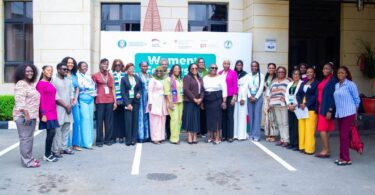
Minister of Education, Dr. Tunji Alausa, disclosed this in Abuja at a meeting with the Nigerian Universities Ranking Advisory Committee, NURAC, which has now been renamed the Nigerian Tertiary Education Ranking Advisory Committee to reflect its broadened scope, according to a statement issued by Ikharo Attah, Special Adviser on Media and Communications.
The expanded framework, the Minister said, forms part of President Bola Tinubu’s education reforms under the Renewed Hope Agenda, driven through the Nigeria Education Sector Renewal Initiative, NESRI, and is designed to strengthen quality assurance, accountability and global competitiveness across the country’s tertiary education landscape.
The Minister noted that the ranking system would give institutions clear benchmarks to measure performance, spotlight areas needing improvement, and spur healthy competition among schools.
Alausa confirmed that the 2026/2027 ranking exercise for universities will begin in September, with the committee to determine timelines for rolling out the process to polytechnics and colleges of education.
He assured that the Federal Government, through the Tertiary Education Trust Fund, TETFund, would fund the exercise, develop guidelines to institutionalise it, and formally notify vice-chancellors and heads of institutions that compliance is mandatory.
He pledged the Ministry’s full commitment to policy direction, funding and capacity-building, expressing confidence that the reforms would position more Nigerian institutions for stronger performance in future global rankings.
Also speaking, the Minister of State for Education, Professor Suwaiba Sa’id Ahmad, described the move as a major step toward reinforcing accountability and quality in the sector, stressing that both public and private institutions must be covered to guarantee minimum standards nationwide.
She said the ranking would help institutions identify gaps and drive measurable improvement as the system continues to grow.
NURAC Chairman and former Executive Secretary of the National Universities Commission, Emeritus Prof. Peter Okebukola, said the committee’s original proposal, congratulating the Tinubu administration on Nigerian universities’ rising global visibility and calling for greater investment, had been exceeded by the Minister’s response, which expanded the committee’s mandate significantly.