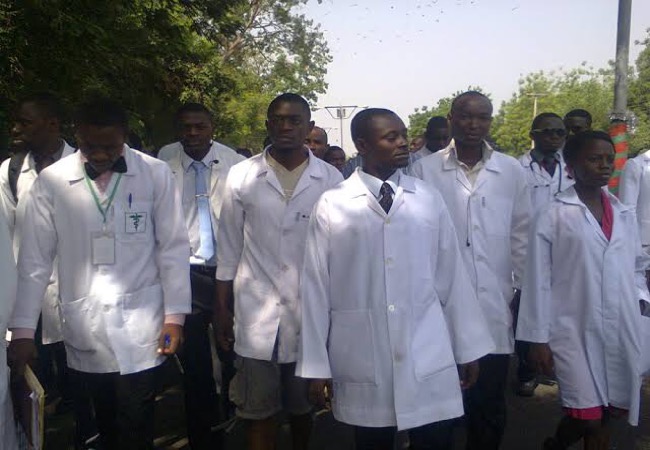
The Federal Government has announced the recruitment of no fewer than 37,000 health workers across its health institutions since 2023.
The government said the recruitment, alongside the training of 70,000 frontline workers, was aimed at improving service delivery.
The Assistant Director of Information and Public Relations, Federal Ministry of Health, Ado Bako, made this known via a statement issued on Saturday, July 4, 2026.
Bako stated that the government had also approved Nigeria’s National Policy on Health Workforce Migration to address the growing challenge of skilled health professionals leaving the country.
Bako said the policy was designed to improve workforce planning, strengthen retention and promote ethical recruitment.
“These actions are supported by the National Health Workforce Registry and continued investments in specialist training and workforce development,” he added.
Bako also highlighted progress under the revised Basic Health Care Provision Fund (BHCPF 2.0), describing it as a key driver of improved primary healthcare delivery.
He said the federal government had approved N32.9 billion under the revised framework to support 8,300 Primary Health Centres, with expansion ongoing to have 13,000 facilities nationwide.
According to him, government’s health reforms have contributed to 80 million patient visits, while over 21 million vulnerable Nigerians have accessed healthcare through the Vulnerable Groups Health Insurance Fund.
How I overcame failure to qualify as Nigeria’s youngest chartered accountant — Osasere
Bako added that disease surveillance and outbreak preparedness were also being strengthened through the Nigeria Centre for Disease Control and Prevention gateway under the BHCPF.
On access to medicines, the ministry spokesperson said the government was expanding local pharmaceutical manufacturing through the Presidential Initiative to Unlock the Healthcare Value Chain.
“The objective is simple: strengthen local production, improve medicine security and make essential medicines more available and affordable for Nigerians,” he said.
Bako said the reforms also covered investments in health infrastructure, maternal and newborn health, emergency preparedness, digital health systems and accountability.
Bako stated: “Nigeria’s health sector still faces significant challenges, and government has never suggested otherwise.
“Lasting reforms, however, are measured not by rhetoric, but by sustained action, transparent implementation and measurable results.
“Our mandate remains clear: save lives, reduce both physical and financial pain, and improve the health and wellbeing of all Nigerians.”